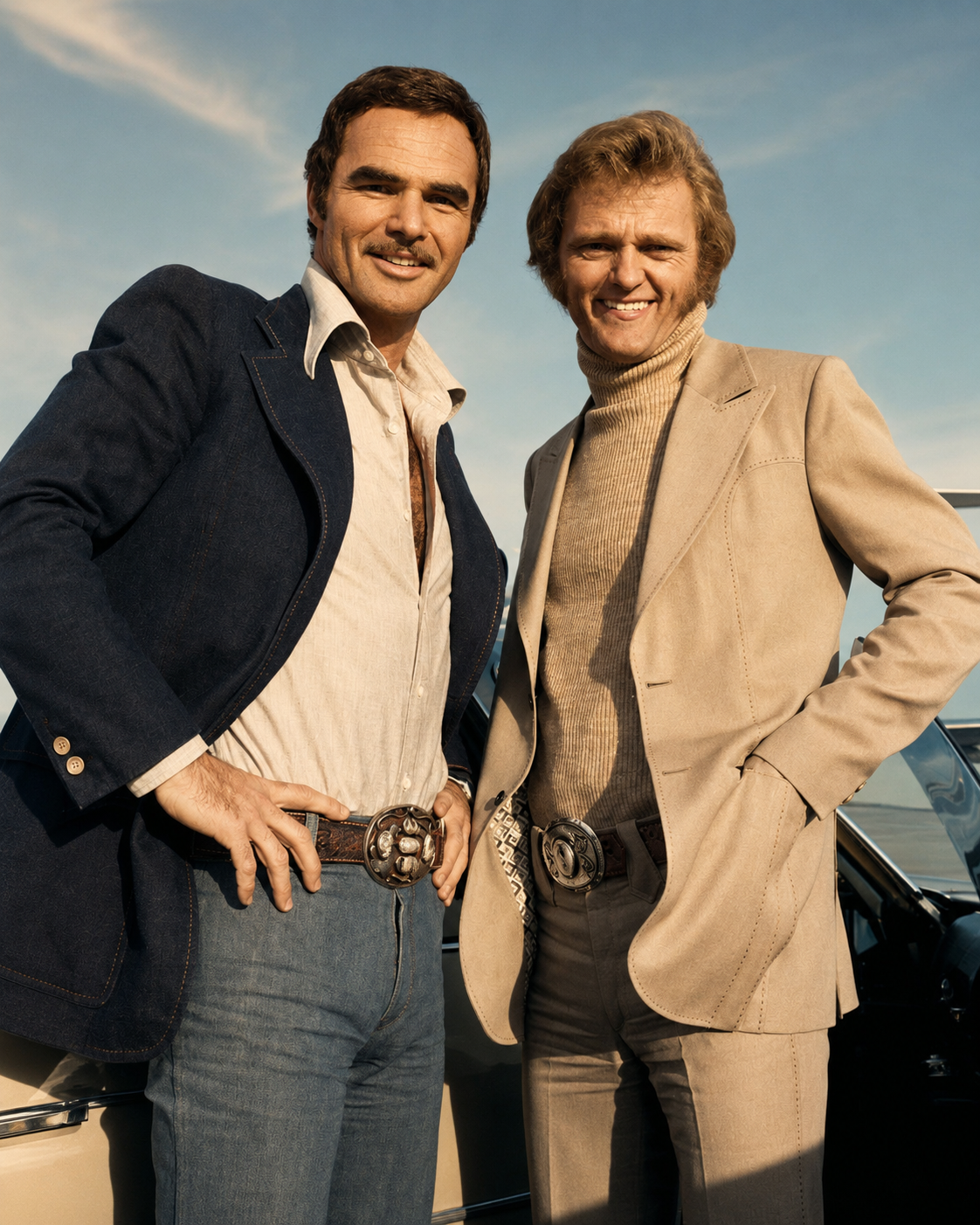
The Legacy of Jerry Reed and “East Bound and Down”
In the world of country music, some stories unfold in the most unexpected places. For Jerry Reed, a talented musician and guitarist from Atlanta, that place was not a stage but a movie set, where he would create a timeless anthem in just a matter of hours. This is the story of how Reed shaped not only a film but an era, and how his contributions became a heartbeat for a cultural phenomenon.
From Humble Beginnings to Nashville’s Heart
Jerry Reed’s journey was far from conventional. Born in Atlanta, he spent part of his childhood moving through foster homes and orphanages, which instilled in him a resilience that would echo throughout his life and career. By the mid-1970s, Reed had become a celebrated figure in Nashville, known for his unique guitar style and charismatic voice that could effortlessly blend humor, speed, and emotion. Before he became an integral part of one of America’s most beloved road movies, he had already laid the groundwork for a remarkable musical career.
A Role Reversal: The Bandit and His Partner
When Hal Needham, a stuntman turned director, was in the early phases of making Smokey and the Bandit, Reed was initially slated to star as the titular character. However, the dynamic changed when Burt Reynolds entered the picture, expressing his desire to take on the lead role. This could have been a moment of disappointment for Reed, who might have felt overshadowed. Instead, he embraced the opportunity to step into the role of Cledus “Snowman” Snow, the Bandit’s loyal truck-driving partner.
Snowman was no ordinary sidekick; he was a character filled with humor and vulnerability, a friend who resonated with audiences. Jerry Reed’s portrayal brought a relatable quality to the film, allowing viewers to connect with him on a personal level. Yet, it was not just his acting that made an impact; it was Reed’s musical genius that truly defined the film’s essence.
The Anthem of the Open Road: “East Bound and Down”
As the film began to take shape, Hal Needham realized he needed a song that would encapsulate the spirit of the film—something that felt like the exhilaration of a speeding Trans Am, the banter of a CB radio, and the thrill of open-road freedom. In a matter of hours, Jerry Reed answered the call with “East Bound and Down.”
The song was much more than a catchy tune; it was a narrative of its own, perfectly capturing the film’s wild chase and carefree spirit. Reed delivered a piece that felt like an engine revving, a punchline delivered at full speed, and an anthem of adventure that resonated with the heart of America. The legend goes that when Reed offered to tweak the song, Needham insisted, “Don’t touch a note,” signifying that Reed had captured the essence of the movie in one fell swoop.
Chart-Topping Success and Cultural Impact
Upon its release, Smokey and the Bandit became a cultural phenomenon, with audiences flocking to theaters to witness the high-speed escapades of the Bandit and Snowman. The black Trans Am became an icon of style and swagger, and while Burt Reynolds basked in the spotlight, it was Jerry Reed’s “East Bound and Down” that provided the film with its soul.
The song climbed to #2 on the country charts, solidifying Reed’s place in music history and ensuring that his contribution would not only accompany the film but also outlive it. To this day, the opening notes of “East Bound and Down” evoke images of highways, truck stops, and a sense of freedom that is difficult to articulate.
A Heartfelt Connection
When Jerry Reed passed away in 2008, he left behind a legacy intertwined with his friend Burt Reynolds, who lost one of his closest companions just over a decade later. Their connection was not merely one of co-stars but of two men who had shared a moment in time that resonated deeply with fans. This timing adds an emotional layer to the story, as it serves as a reminder of the fleeting nature of life and the bonds forged through shared experiences.
Ultimately, Smokey and the Bandit is more than just a buddy film; it is a celebration of friendship, adventure, and the pursuit of freedom. Jerry Reed’s decision to stay with the project, despite losing the lead role, speaks volumes about his character. He transformed what could have been a moment of disappointment into an opportunity to create something lasting. In doing so, he became the very heartbeat of a film that continues to resonate with audiences.
Conclusion: The Ride That Never Ends
Jerry Reed’s story is a testament to the power of resilience and creativity. From his humble beginnings to his iconic role in a cultural classic, Reed showed that sometimes the most profound contributions come from unexpected places. His legacy lives on through “East Bound and Down,” a song that has become synonymous with the spirit of adventure and freedom. As we reflect on his life and work, we are reminded that true artistry endures, capturing moments that resonate long after the credits roll.