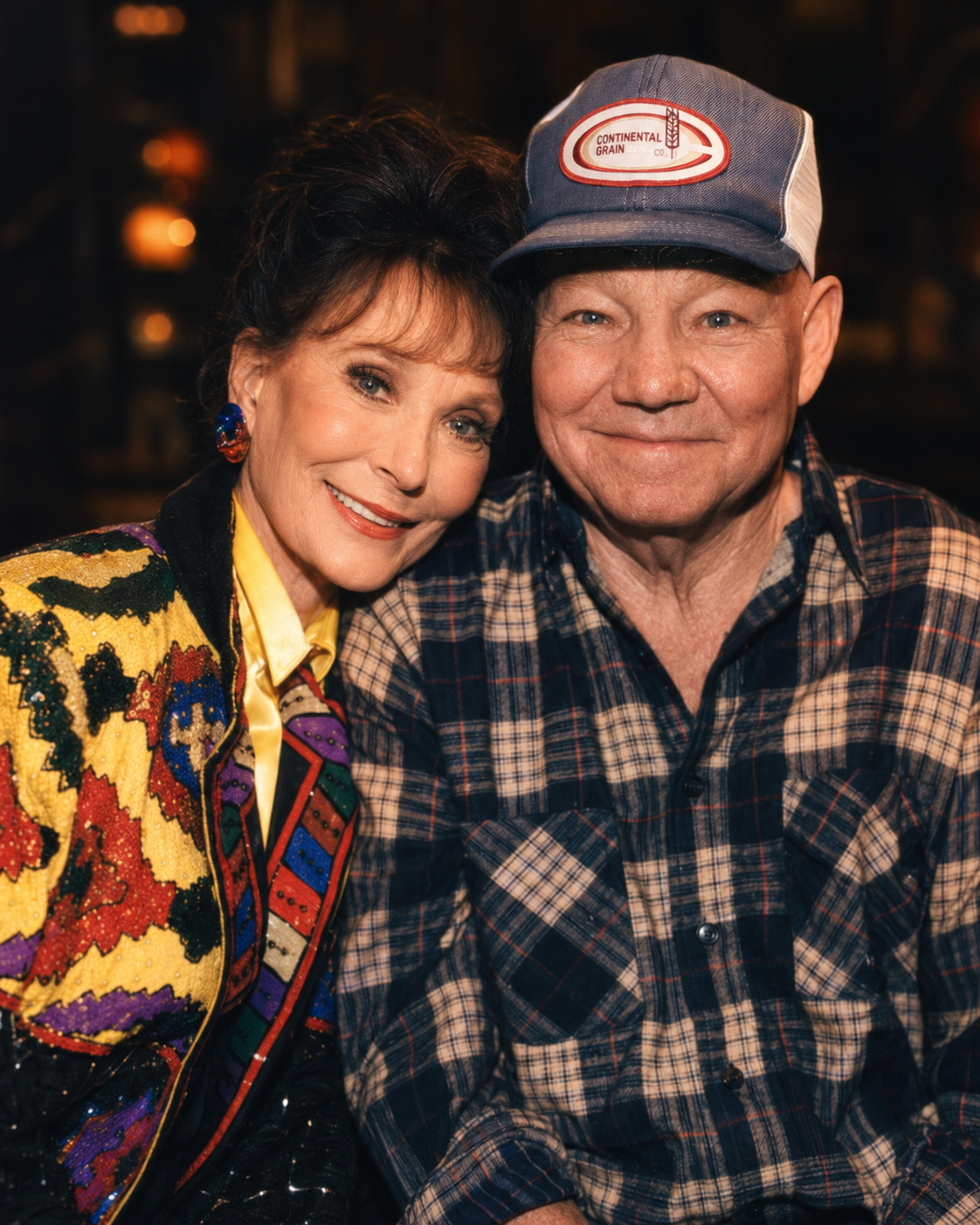
Love, Heartbreak, and Legacy: The Story of Loretta and Oliver Lynn
In August 1996, just five days shy of his 70th birthday, Oliver “Doolittle” Lynn lay on his deathbed. Beside him sat Loretta Lynn, the woman with whom he had shared a tumultuous but passionate 48 years of marriage. Their union began when Loretta was just 15, and while it was fraught with challenges, it was also filled with moments that shaped the landscape of country music. As she watched the man who had both nurtured her dreams and broken her heart slip away, Loretta found the courage to sing a song that had remained unsung for over a decade.
The Early Years: A Love Story Born in Adversity
Loretta and Doolittle’s story is one rooted in complexity. They were married in an era when relationships were expected to be straightforward, yet theirs was anything but. Doolittle, a man marked by his struggles with alcohol and infidelity, often left Loretta feeling alone and heartbroken. He had abandoned her during childbirth, leading to years of pain and emotional turmoil. Yet he was also the man who recognized her talent and bought her first guitar, encouraging her to pursue a career in music.
During their life together, Doolittle was Loretta’s fiercest supporter. He famously told a bandleader in Washington state, “I got a girl here who’s the best country singer there is, next to Kitty Wells.” This unwavering belief helped propel her into the spotlight, allowing her to become one of the most authentic voices in country music history.
A Song Born from Heartache: “I Got the Weakness”
Years before that fateful August afternoon, Loretta had penned a song titled “I Got the Weakness.” The lyrics encapsulated the heartache of loving a man like Doolittle, a man who struggled to express his affections soberly. The poignant line, “Wouldn’t it be fine if you could say you love me just one time — with a sober mind,” speaks volumes about the unfulfilled desire for a love that is straightforward and free from the shadows of addiction.
Despite the emotional weight of the song, Loretta never found the courage to sing it in front of Doolittle for eleven long years. Perhaps it was the pain it evoked or the fear of confronting their complicated reality. Some songs, after all, are easier to share with the world than with the one who inspired them.
The Final Farewell: A Song of Truth
On that quiet afternoon in August 1996, as Loretta sat by Doolittle’s side, she finally found the strength to sing “I Got the Weakness.” The room was filled with an unspoken understanding, a shared history that encompassed love, heartache, and forgiveness. While Doolittle could not verbally respond, he heard her. In those final moments, their long and tumultuous journey was distilled into one simple act of love — a song sung from the heart.
The impact of that moment was profound, marking a culmination of pain and triumph that Loretta would carry for the next twenty-six years. Doolittle passed away on August 22, 1996, leaving behind a legacy that was as complex as their relationship. Loretta continued to live her life, honoring their shared history while also embracing her own independence and success as a musician.
The Legacy of Loretta Lynn
Loretta Lynn emerged as one of the most influential figures in country music, known for her raw honesty and authenticity. Her songs often tackled themes of love, heartbreak, and resilience, resonating with audiences on a deeply emotional level. Tracks like “Coal Miner’s Daughter,” “You Ain’t Woman Enough,” and “Fist City” showcased her ability to draw from personal experiences and transform them into universal truths.
Throughout her career, Loretta received numerous accolades, including Grammy Awards and a spot in the Country Music Hall of Fame. Yet, it was her ability to convey the complexities of love and life that made her a beloved figure in the genre. Critics and fans alike appreciated her fearless exploration of topics that many would shy away from, and her legacy continues to influence aspiring artists today.
The Enduring Impact of a Complex Love
The story of Loretta and Doolittle Lynn is not merely one of love and heartbreak; it embodies the contradictions of life itself. It is a narrative that highlights the depths of human emotion, the struggles for understanding and connection, and the transformative power of music. Their journey reminds us that love can be both uplifting and painful, and that sometimes, the most profound truths are found in the songs we sing.
As we reflect on their lives, we recognize that the legacy of Loretta Lynn goes beyond her music; it is a testament to a woman who turned her pain into art, who gave voice to the unspoken struggles of countless others, and who, even in her moments of sorrow, found the strength to share her truth.