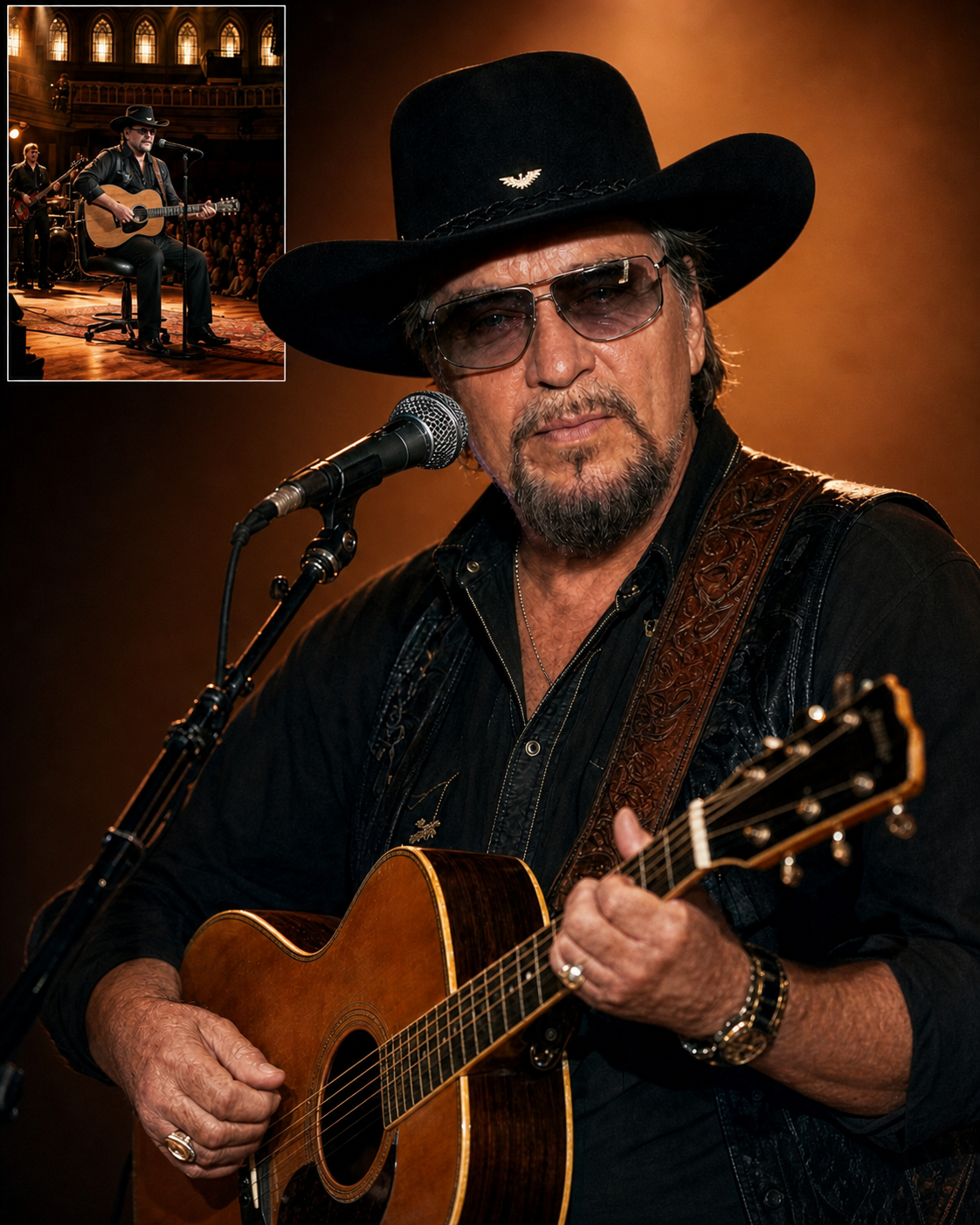
Waylon Jennings: The Outlaw’s Last Stand at the Ryman Auditorium
In January 2000, the Ryman Auditorium buzzed with an energy that belied the somber reality facing its headliner. Waylon Jennings, the man who redefined the landscape of country music, stepped onto the stage for what would be his final concert—a five-hour performance that would become legend. Despite battling severe health issues, Jennings refused to let his deteriorating body dictate his passion for music. As he took the stage, he embodied the spirit of an outlaw, defying expectations and embracing the rawness of life in every note.
The Cost of an Outlaw Life
By the turn of the millennium, the toll of a life lived at full throttle was evident. Jennings’ years of hard living—marked by cocaine use, excessive drinking, and a series of health complications including heart bypass surgery and diabetes—had taken a significant toll. His body, once a vessel of boundless energy, was now struggling to keep up with his indomitable spirit. Walking and standing became monumental challenges, leading doctors to urge him to retire from touring.
Friends and bandmates were concerned. They watched as Jennings, the man who had once commanded stages effortlessly, now labored through each movement. Yet, in true outlaw fashion, Jennings would not go quietly into the night. He had spent a lifetime challenging norms, and as he faced the end, he clung to the one thing that had always brought him joy—music.
Assembling the Dream Band
Determined to leave the world on his own terms, Jennings gathered a thirteen-piece ensemble he dubbed the Waymore Blues Band. This group was not just a collection of musicians; it was a family. Among them were his beloved wife, Jessi Colter, and fellow artists John Anderson and Travis Tritt, who understood the profound significance of this moment. The Ryman Auditorium, often referred to as the “Mother Church of Country Music,” was hallowed ground that had hosted countless legends. For Jennings, standing on that stage was a symbolic act of defiance against his own mortality.
The performance was not merely a concert; it was a poignant statement. Jennings was not there to masquerade as the untouchable star he once was. Instead, he embraced the physical struggle, allowing it to add depth to his performance. As he sang “Never Say Die,” the lyrics transcended mere words; they became a declaration of his refusal to surrender to the inevitable.
The Power of Presence
During that unforgettable night, Jennings transformed the Ryman Auditorium into a sanctuary of raw emotion. While the audience could see the effort etched on his face and feel the weight of his struggles, they also witnessed the undeniable fire that still burned within him. With each song, Jennings bared his soul, intertwining frailty with strength in a way that only he could. The performance became a cathartic experience, a farewell wrapped in the warmth of shared memories and communal love for the music that had defined their lives.
The concert was not about perfection; it was about authenticity. Jennings’ voice, though strained, resonated with a depth of experience that brought a new dimension to each note. Fans were reminded not only of the man who had shaped country music but also of the human being who had faced life’s adversities head-on. The audience felt every ounce of his passion, creating a connection that transcended the typical concert experience.
A Lasting Legacy
Two years after that monumental night, Waylon Jennings passed away, leaving behind a legacy that continues to influence country music today. His willingness to confront his vulnerabilities on stage became a lesson for future generations of musicians. In an industry often characterized by polished façades and carefully curated images, Jennings stood as a testament to the beauty of imperfection and authenticity.
Today’s country stars, faced with the slightest ailment, may choose to cancel tours and step back from the spotlight. Yet, Jennings’ final concert serves as a stark reminder of what it means to be an artist. He did not simply perform one last show; he transformed a fragile body into a fierce act of defiance. His spirit, as much as his songs, continues to resonate, reminding us all that true artistry transcends physical limitations.
The Outlaw’s Last Lesson
Waylon Jennings left this world not as a superstar untouched by struggle, but as a human being who faced his battles with courage and honesty. His final performance was not just a goodbye but a celebration of life, music, and the enduring power of storytelling. Jennings taught us that it is not about how one departs this life, but about how one chooses to live it. His legacy is an invitation to embrace authenticity and to never shy away from the truth, no matter how painful it may be.
As the echoes of that night at the Ryman Auditorium continue to reverberate through the annals of country music history, Waylon Jennings remains an enduring symbol of the outlaw spirit—one that will never be forgotten.