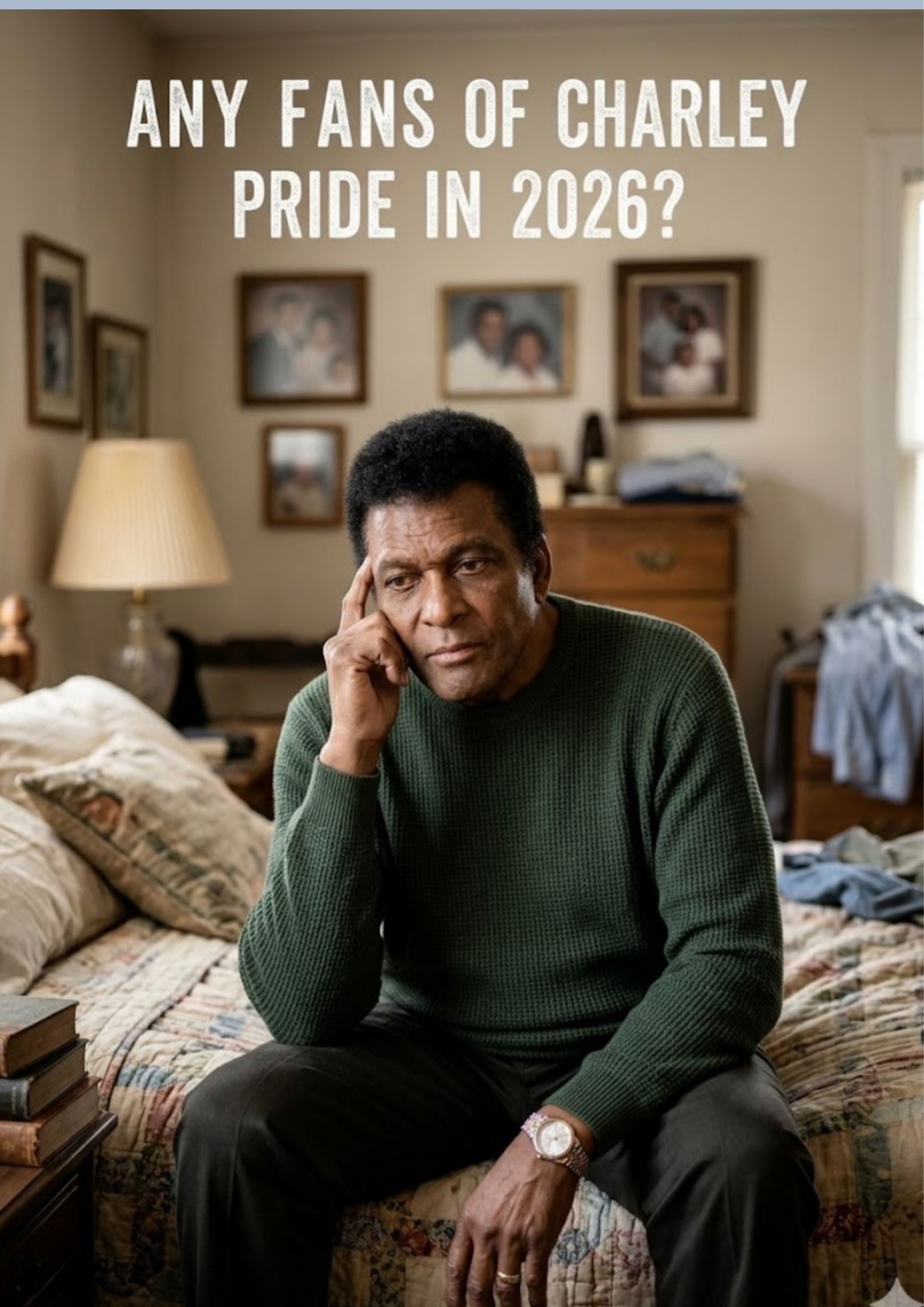
The Voice They Trusted Before They Knew His Name
In the annals of music history, certain moments stand out as turning points that redefine an entire genre. These moments often come not through grand gestures or public outcries, but through a singular, undeniable voice that transcends barriers. Charley Pride’s journey through country music exemplifies such a moment—a tale that begins far from the spotlight, in the cotton fields of Sledge, Mississippi, where hardship was a constant companion and dreams needed nurturing over time, often in silence.
A Voice Before a Face
One of the most fascinating aspects of Charley Pride’s rise to fame is how RCA Records chose to release his first records without a photograph on the cover. When country music fans eventually laid eyes on him, they had already made him a star based solely on the strength of his voice. This phenomenon goes beyond mere marketing strategy; it encapsulates a profound sense of trust. Before listeners could form biases based on appearances, they were captivated by something authentic—a voice steeped in resilience, longing, and dignity. Unbeknownst to them, they had already opened the door to a new era in country music.
Humble Beginnings
Charley Pride’s early life was not marked by the opportunities that many contemporary artists enjoy. As the fourth of eleven children in a sharecropping family, he grew up in an environment where discipline was required for survival, long before ambition could take root. The cotton fields that defined his childhood were not merely symbolic; they were a daily reality, demanding hard work from sunrise to sunset. Yet, amidst the toil, a quieter dream began to blossom.
Notably, Pride’s first guitar was not a gift or an inheritance; it was a hard-earned purchase made after two years of saving coins from odd jobs. This image of a young man nurturing a distant aspiration speaks volumes about his character. He was not merely waiting for opportunity to knock; he was actively preparing himself for when that moment would arrive.
A Dual Path: Sports and Music
Initially, music was not the primary avenue Pride pursued. Like many young men of his generation, he aimed for a career in sports, eventually earning a spot in the Negro American League, a chapter of his life that is often glossed over. This experience was significant; it instilled in him a sense of discipline and composure while teaching him that success requires relentless pursuit, often in the face of uncertainty.
The Breakthrough Moment
Then came 1965—an important year that would change everything. A demo tape caught the attention of Cowboy Jack Clement, a producer with an open mind and a keen ear. Recognizing something remarkable, he passed the tape along to Chet Atkins, leading to a contract that would ultimately reshape the landscape of country music. However, the industry hesitated, not due to the quality of Pride’s voice, which was undeniable, but because of the surrounding societal norms and expectations of the time.
A groundbreaking decision was made: RCA would release his music without a photograph. The songs would stand on their own, and they did. Audiences welcomed Pride’s music into their lives, forming a bond with the songs long before they learned who was behind the voice. The brilliance of this strategy is that it revealed a truth the industry had long doubted—great country music doesn’t ask for permission; it simply arrives.
Defiance in the Face of Conformity
Throughout his journey, there were voices suggesting that he change his name or soften his image to become more palatable to mainstream audiences. Pride’s response was resolute: “No.” This refusal was not an act of defiance seeking attention; it was a principled stand that defined his life. He had not come this far to conform to someone else’s idea of comfort.
The Grand Ole Opry: A Defining Moment
Then came the Grand Ole Opry, a hallowed venue in country music history. On January 7, 1967, Charley Pride stepped onto that legendary stage and performed a Hank Williams song. What transpired next has been described in many ways, but the essence remains unchanged: a moment of silence followed by overwhelming recognition and applause that echoed through the hall. This night didn’t just introduce Charley Pride; it confirmed his place in the pantheon of country music.
Legacy and Recognition
The accolades that followed—twenty-nine number-one hits, Entertainer of the Year honors, and an induction into the Country Music Hall of Fame—are impressive, yet they only tell part of Pride’s story. The true weight of his legacy lies in the grace with which he navigated the challenges of his time. When referred to as the “Jackie Robinson of country music,” Pride acknowledged the comparison but insisted he wanted to be known for his music—the work, the voice, and the dedication he brought to his craft.
A Legacy That Resonates
Some artists demand recognition through their actions; others, like Charley Pride, earn it so completely that it becomes inevitable. He did not seek validation from the world; he entered the room with quiet certainty, and once he sang, there was no doubt that he belonged. This is why his story continues to resonate today; long before audiences saw his face, they made a decision that mattered more than anything else—they listened. In doing so, they changed the course of country music forever.