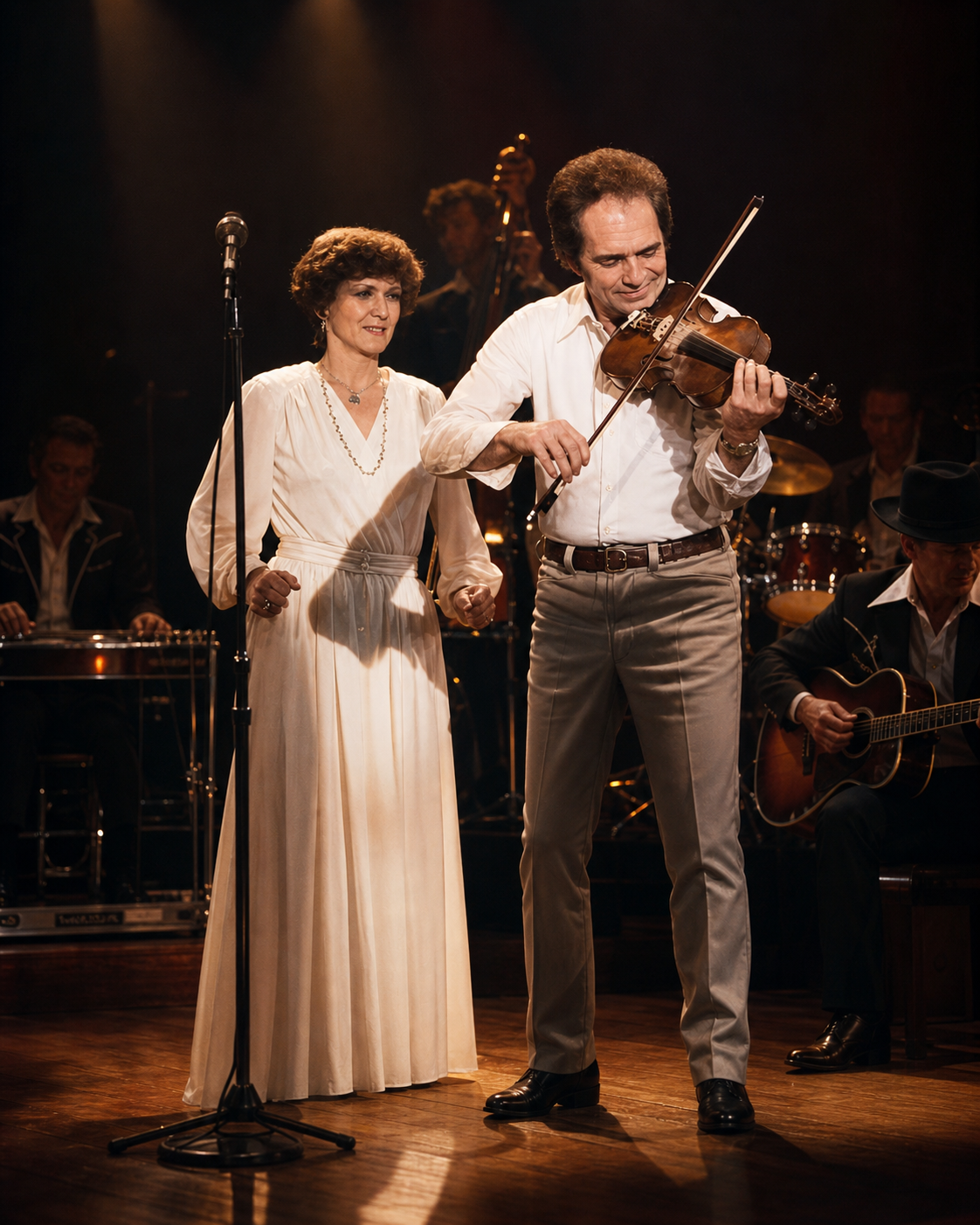
The Song He Wrote for His Wife: A Love Letter in Music History
In the late 1960s, amidst the hustle and bustle of Los Angeles International Airport, a poignant moment unfolded that would echo through the annals of country music history. Merle Haggard, a stalwart of the genre, stood next to his wife Bonnie Owens at the luggage carousel, weary from a grueling tour. As he gazed upon her tired expression, he remarked, “You know, we haven’t had time to say hello to each other.” This seemingly simple statement resonated deeply with both songwriters, igniting the spark for what would become one of the most enduring love songs of all time: “Today I Started Loving You Again.”
Artists Behind the Song
Merle Haggard was not just a prolific songwriter; he was a reflection of the struggles and triumphs of the American spirit. His life, marked by hardship and resilience, infused his music with authenticity. Bonnie Owens, an accomplished singer in her own right, was not just Haggard’s wife but a vital collaborator who understood the intricacies of country music’s emotional landscape. Their partnership was both romantic and creative, filled with shared experiences that would ultimately shape their legacy.
A Song Born from Everyday Life
The genesis of “Today I Started Loving You Again” is as unassuming as it is profound. A few weeks after that fateful conversation at the airport, Merle asked Bonnie to pick up hamburgers from a local joint while they were on the road. During her brief absence, inspiration struck. By the time she returned with a paper sack in hand, Haggard had penned the title “Today I Started Loving You Again” on a piece of paper, repeating it over and over, as if it were a mantra.
Bonnie’s return was more than a mere delivery of food; it was the catalyst for the creation of a song that would resonate with countless listeners. As she sat down to help shape the melody and chords, Haggard, who struggled with musical notation, relied on her to bring his emotional vision to life. In an act of fairness and recognition, he awarded her half of the songwriting credit—an acknowledgment of their shared journey and the song’s collaborative spirit.
The B-Side That Became a Classic
Released in 1968, “Today I Started Loving You Again” was relegated to the B-side of Haggard’s chart-topping hit “The Legend of Bonnie and Clyde.” Initially, this placement seemed to bury the song, as it did not chart independently. However, the true power of the track lay not in its commercial success but in its emotional honesty. Country music aficionados have an uncanny ability to discover genuine sentiment, and over time, the song garnered attention and acclaim, becoming one of the most covered songs in the genre’s history.
More than 150 artists, including legends like Emmylou Harris, Conway Twitty, and Dolly Parton, have interpreted “Today I Started Loving You Again,” each bringing their unique voice and experience to the piece. The song’s universal theme—the bittersweet return of love after heartache—strikes a chord with listeners from all walks of life, solidifying its place in the country music canon.
Enduring Bonds Beyond Divorce
Despite their eventual divorce in 1978, Merle Haggard and Bonnie Owens maintained a deep respect for one another. Their connection, forged through years of collaboration and shared experiences, transcended the traditional boundaries of marriage. Bonnie continued to sing backup for Haggard, even serving as the maid of honor at his next wedding. This enduring bond is a testament to the complexity of love and the ways it can evolve over time.
The Legacy of a Love Letter
“Today I Started Loving You Again” is more than just a classic country song; it serves as a poignant reminder that love can be expressed in the most ordinary moments. It captures the essence of longing and the emotional turbulence that often accompanies relationships. The song’s authenticity lies in its simplicity—born from a tired marriage and everyday errands, it encapsulates the beauty of recognizing love anew.
As we reflect on the stories behind the music, it becomes clear that some of the most powerful love letters are not penned in grand gestures but in the quiet corners of life. Merle Haggard’s heartfelt tribute to Bonnie Owens, conceived during a mundane moment, continues to resonate with fans and artists alike, ensuring that their story—and the song—will endure through the ages.