The Legacy of Marty Robbins: A Son’s Tribute Through Song
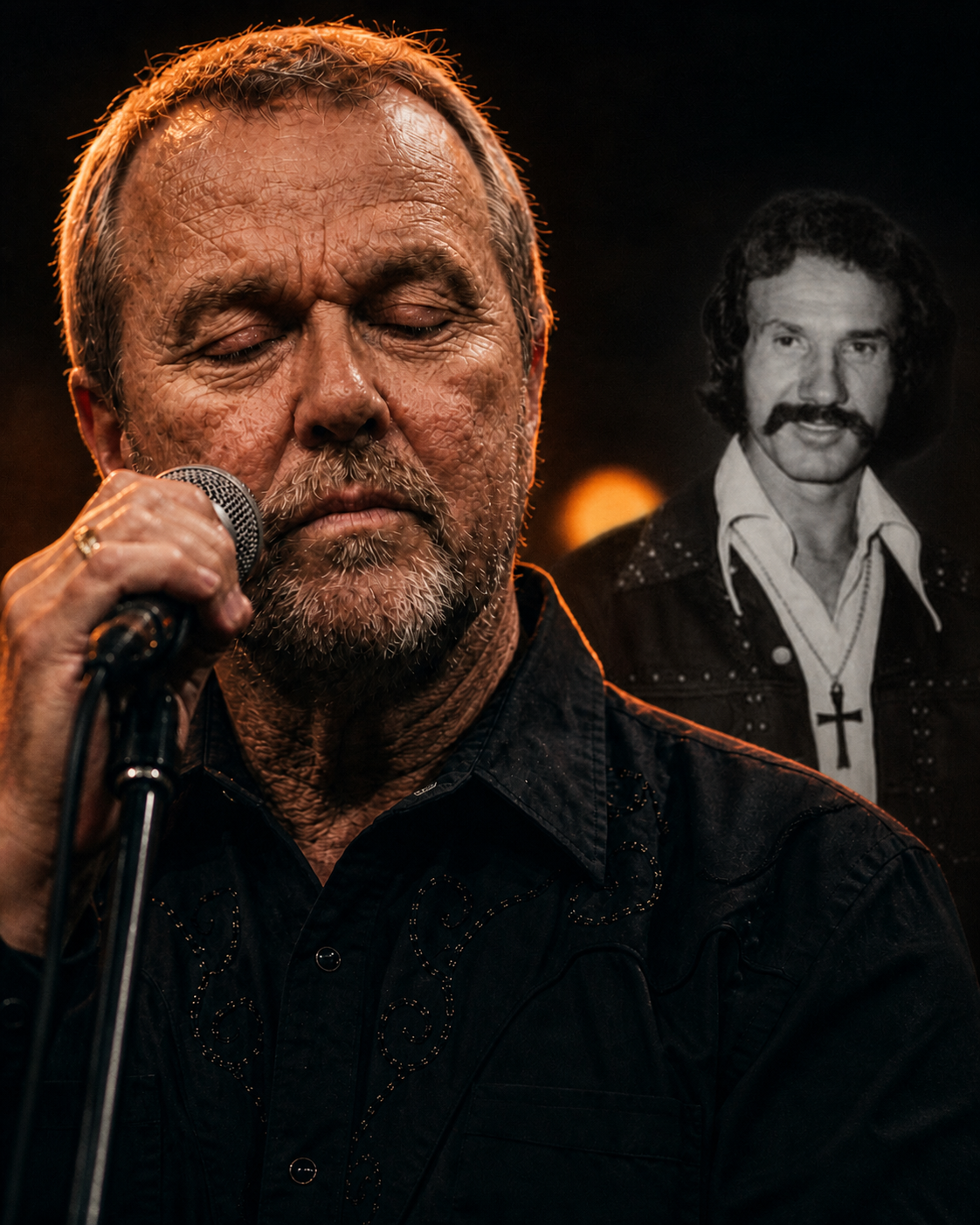
“I don’t sing them for the crowd. I sing them so he can still hear them.” This poignant sentiment encapsulates the essence of Ronny Robbins’ journey as he continues to perform his father’s songs decades after his passing. The story of Ronny and his legendary father, Marty Robbins, is not merely one of nostalgia; it is a deep, resonant conversation that transcends time.
A Life Cut Short
On December 8, 1982, the music world lost a true icon when Marty Robbins succumbed to his fourth heart attack at St. Thomas Hospital in Nashville. Just six days prior, he had undergone open-heart surgery, and only two months earlier, he had been inducted into the Country Music Hall of Fame. At just 57 years old, Marty left behind an extraordinary legacy that included over 500 recorded songs, 60 albums, 16 No. 1 hits, and two Grammy Awards. His contributions to country music are immeasurable, with classics like “El Paso,” “Big Iron,” “A White Sport Coat,” and “Don’t Worry” forever etched in the annals of music history.
A Complex Relationship
Ronny Robbins grew up witnessing two distinct sides of his father. On one hand, he saw the showman who captivated audiences under the bright lights of Nashville. On the other, he experienced the private man, a racing enthusiast who found solace among engines and pit lanes. This duality shaped Ronny’s understanding of his father’s artistry, imbuing it with a personal significance that goes far beyond mere performance.
In Marty’s final years, as his health began to decline, Ronny was often by his side, guitar in hand. He provided vital support during performances, stepping in with harmonies at pivotal moments, attuned to the nuances of his father’s needs. This intimate connection not only fostered a unique bond but also laid the foundation for Ronny’s own artistic journey.
Carrying the Torch
After Marty Robbins passed, Ronny had every reason to step away from the spotlight, yet he chose a different path. Rather than striving to replicate his father’s success, Ronny became a quiet custodian of the Robbins legacy. He embraced the role of preserving Marty’s music, performing classics like “El Paso” and “Big Iron” at various gatherings, including Country’s Family Reunion tapings.
Unlike many tribute acts, Ronny’s performances are not about overshadowing his father’s legacy but about keeping it alive. Each note he plays serves as a reminder that these songs are not just relics of the past; they are living memories. Ronny’s approach transforms each performance into an emotional experience, where the audience feels the love and connection to the original artist.
Words That Resonate
In October 1982, during the Hall of Fame induction ceremony, a poignant exchange occurred between Marty and Ronny backstage. Although the exact words remain a private memory, the essence of their conversation was clear: Marty recognized that his music would continue long after he was gone and trusted Ronny to carry that legacy forward. This moment encapsulated the profound bond between father and son, emphasizing that a father’s true inheritance often lies in intangible gifts like love and understanding.
More Than Just a Song
When Ronny Robbins sings his father’s songs, he does not merely perform; he engages in a heartfelt dialogue with the past. The songs evoke memories of family, rehearsals, and quiet moments shared between them. For Ronny, each performance is a tribute not just to the music but to the man behind it. It is a testament to the enduring connection between a son and his father, a bond strengthened through shared melodies.
Enduring Legacy
Even after more than four decades since Marty Robbins’ passing, his music continues to resonate. “El Paso” unfolds like a cinematic journey, while “Big Iron” remains a timeless tale of heroism. Each song carries the weight of emotion and storytelling that Marty mastered, and Ronny ensures that those narratives continue to be heard.
In a world where music often feels transient, Ronny Robbins stands as a reminder that true legacy is not just about fame and accolades. It is about the love woven into each note and the stories that will forever echo through generations. Ronny’s dedication to his father’s music illustrates that sometimes, melodies serve as the most profound means of keeping love alive.
Conclusion
In a career that spans decades, Ronny Robbins has transformed his role as a son into that of a steward of his father’s music. He carries forward the legacy of Marty Robbins with grace, ensuring that the songs live on, not just for the crowd, but as a tribute to the love that binds them together. As we listen to Ronny sing, we are reminded that love often survives best when it is given a melody.