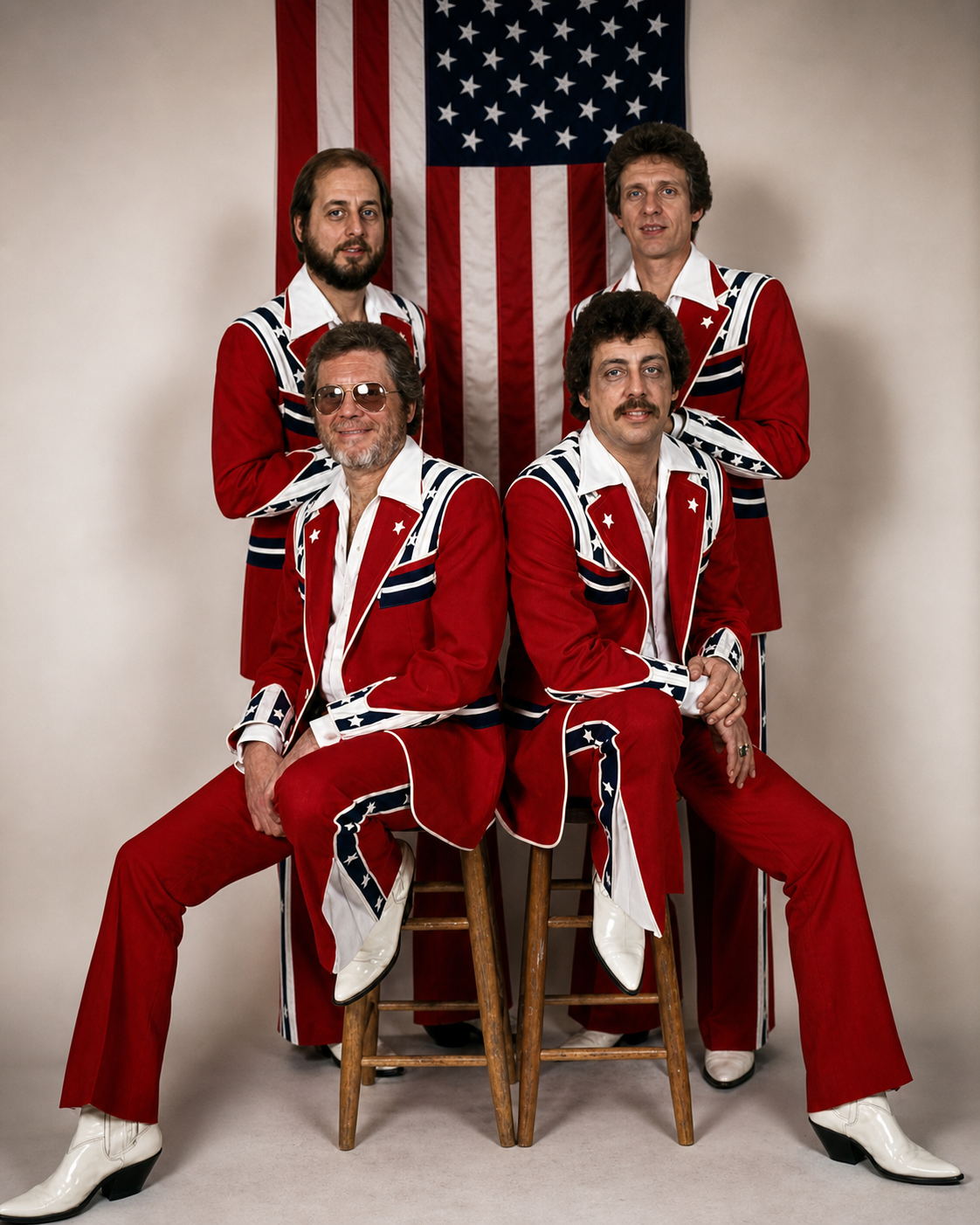
The Statler Brothers: A Legacy of Harmony and Home
In the world of country music, success often comes with a set of expectations—particularly the notion that artists must migrate to Nashville, the heart of the industry. Yet for four men from a small town in Virginia, the call to relocate was met with a resolute “no” that would define their legacy. The Statler Brothers, originating from Staunton, Virginia, turned down the allure of Nashville and forged a path that not only celebrated their roots but also established them as one of the most decorated acts in country music history.
Humble Beginnings
Before they were known as The Statler Brothers, Harold Reid, Don Reid, Phil Balsley, and Lew DeWitt were simply four boys growing up in a close-knit community in the Shenandoah Valley. Sons of farmers and mill workers, their early lives were steeped in the values of hard work and loyalty. The boys first learned to harmonize in a church choir, where the seeds of their musical journey were sown. They walked the same streets, attended the same schools, and shared the same pews every Sunday. Their bond was as much familial as it was musical, setting the stage for a unique partnership.
A Chance Encounter with Johnny Cash
In 1964, a fortuitous encounter with the legendary Johnny Cash changed everything. The meeting, which took place in Roanoke, Virginia, was brief—reportedly lasting only five minutes. In a surprising twist, Cash hired The Statler Brothers as his opening act without having heard them sing a single note. This moment was pivotal, catapulting the four from obscurity to national recognition.
Rapid Rise to Fame
Shortly after joining Cash on tour, The Statler Brothers began to make waves in the music scene. Their breakout hit, “Flowers on the Wall,” resonated with audiences and showcased their distinctive blend of harmonies and storytelling. The success was meteoric; awards began to flood in, including multiple Grammy Awards, and their appearances on national television solidified their place in the country music landscape. However, with this success came pressure from label executives and industry professionals who insisted they must relocate to Nashville to thrive.
The Decision to Stay
Despite the well-meaning advice from industry insiders, Harold Reid and his bandmates were steadfast in their commitment to Staunton. They believed that their roots were integral to their identity as artists. “No,” Reid would say to the executives urging them to leave. This was not a mere act of defiance; it was a decision rooted in a deep understanding of who they were and where they came from. Rather than chase the glimmering lights of Nashville, The Statler Brothers chose to keep their home fires burning.
Establishing Home in Staunton
In a remarkable move that spoke volumes about their values, The Statler Brothers purchased their old elementary school and transformed it into their headquarters. For them, this was more than a business decision; it was a way to stay connected to their childhood and the community that shaped them. They embraced their hometown, hosting an annual Fourth of July festival that attracted over 100,000 fans from all 50 states, turning Staunton into a vibrant hub of music and joy.
Legacy and Honors
The Statler Brothers’ dedication to their roots did not hinder their achievements; in fact, it enhanced them. They earned nine consecutive CMA Vocal Group of the Year awards and were inducted into both the Country Music Hall of Fame and the Gospel Music Hall of Fame. Their music resonated with audiences, and their songs became timeless classics. Kurt Vonnegut even labeled them “America’s Poets,” highlighting the lyrical depth and storytelling prowess that characterized their work.
A Timeless Message
At the heart of The Statler Brothers’ story is a powerful message about the importance of staying true to oneself. They demonstrated that an artist’s journey does not have to involve leaving behind the place that shaped them. Their commitment to their hometown and the values it represented allowed them to carve out a unique niche in the music world, proving that success can be achieved without sacrificing one’s identity.
Conclusion
The legacy of The Statler Brothers is a testament to the power of authenticity and loyalty. In an industry driven by trends and location, they chose to remain steadfast in their identity, reminding us all that true success is not measured by the size of the city one resides in, but by the strength of one’s roots. As they sang their way into the hearts of millions, they kept the porch light burning in Staunton, serving as a beacon for artists everywhere who long to find their place without losing sight of where they began.