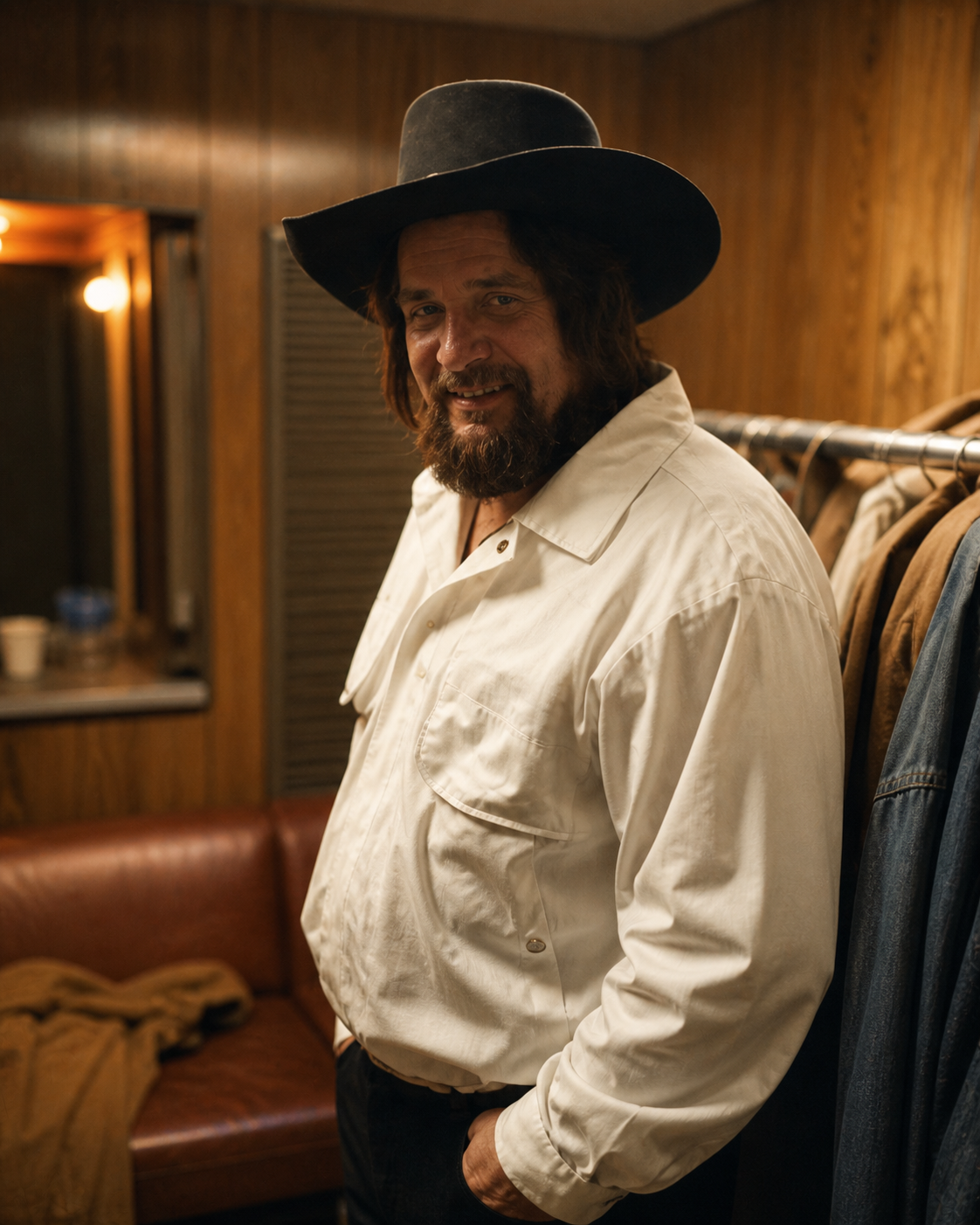
The Weight of a Single Sentence
In the annals of country music, few stories resonate with the profound weight of a single sentence as the one carried by Waylon Jennings. It was the winter of 1959, a time when Jennings was just 21 years old, a young bassist traveling alongside the legendary Buddy Holly on the grueling Winter Dance Party tour. The conditions were harsh; the buses were breaking down, the heaters failed, and the musicians were left to endure the biting cold of the Midwest. Each performance was a test of endurance as they sought refuge in the next town.
A Fateful Choice
On February 2, 1959, after a show in Clear Lake, Iowa, Buddy Holly decided he had had enough of the frigid bus rides and opted to charter a small plane to their next destination. Waylon Jennings was originally slated to be on that flight. However, in a moment of compassion, J.P. “The Big Bopper” Richardson, who was suffering from the flu and uncomfortable in the cramped bus, asked to take Jennings’ seat. Without hesitation, Jennings agreed, a simple act of kindness that would ripple through history in unimaginable ways.
Words That Haunt
When Holly learned of Jennings’ decision, he joked, “Well, I hope your ol’ bus freezes up.” Jennings, quick-witted as ever, shot back, “Well, I hope your ol’ plane crashes.” Tragically, just hours later, that plane went down in a snowy Iowa field, claiming the lives of Buddy Holly, The Big Bopper, Ritchie Valens, and the pilot. This catastrophic event would later be immortalized as “the day the music died.” Yet for Jennings, it was not merely a somber footnote in music history; it was a personal tragedy that haunted him for decades.
Carrying the Burden
In a later interview, Jennings revealed, “For years, I thought I caused it.” This guilt lingered with him as he launched into a successful career that would redefine country music. Jennings became a key figure in the outlaw country movement, contributing to the landmark album Wanted! The Outlaws, which proved that country music could be both commercially viable and artistically raw. Despite his fame and acclaim, the shadow of that fateful night remained a part of his story.
A Refusal to Return
For years, Jennings avoided Clear Lake, unable to confront the ghosts of that evening. He turned down opportunities to perform tribute concerts there, as the weight of memory was simply too heavy. To the world, Buddy Holly was a lost legend, but to Jennings, he was a friend whose laughter still echoed in his mind, a haunting reminder of what could have been.
The Song That Gave Voice to Grief
Finally, in 1976, at the peak of his outlaw country fame, Jennings channeled his grief into music. He wrote “Old Friend,” a song that served as a quiet conversation across the years. It encapsulated the sentiment that some friendships endure beyond the grave, resonating with regret and love. The lyrics, “Old friend, we sure have missed you,” carried an emotional weight that transcended mere nostalgia, reflecting the strange ache of surviving when someone else did not.
A Confession in Song
In 1978, Jennings added yet another layer to his emotional narrative with the song “A Long Time Ago.” In a brief but powerful line, he confessed, “Don’t ask me who I gave my seat to on that plane. I think you already know.” This was not a dramatic proclamation but rather a simple acknowledgment of a truth that had burdened him for nearly two decades. It revealed the deep-seated pain and guilt that shaped his career and artistry.
A Legacy of Remembrance
Waylon Jennings built a reputation on toughness and independence, yet beneath that rugged exterior lay a tender heart. The story of his last words to Buddy Holly serves as a poignant reminder that even the most resilient artists carry memories that haunt them. “Old Friend” stands not just as a tribute but as a delayed goodbye, a conversation with the past that transcends the passage of time.
A Farewell Long Overdue
Ultimately, Waylon Jennings did not cause the tragedy that befell Holly and the others. Yet, for decades, he bore the weight of guilt as if he had. When he finally found the words to express his grief through music, it was not an excuse but a heartfelt farewell. “Old Friend” is more than just a song; it is a testament to the enduring power of memory, love, and the complex emotions that come with survival in the wake of loss.
Conclusion
Waylon Jennings’ journey through grief and memory reminds us that even in the world of music, personal stories can deeply influence an artist’s work. His songs resonate with those who have faced loss and regret, creating a legacy that extends beyond the stage and into the hearts of listeners everywhere.