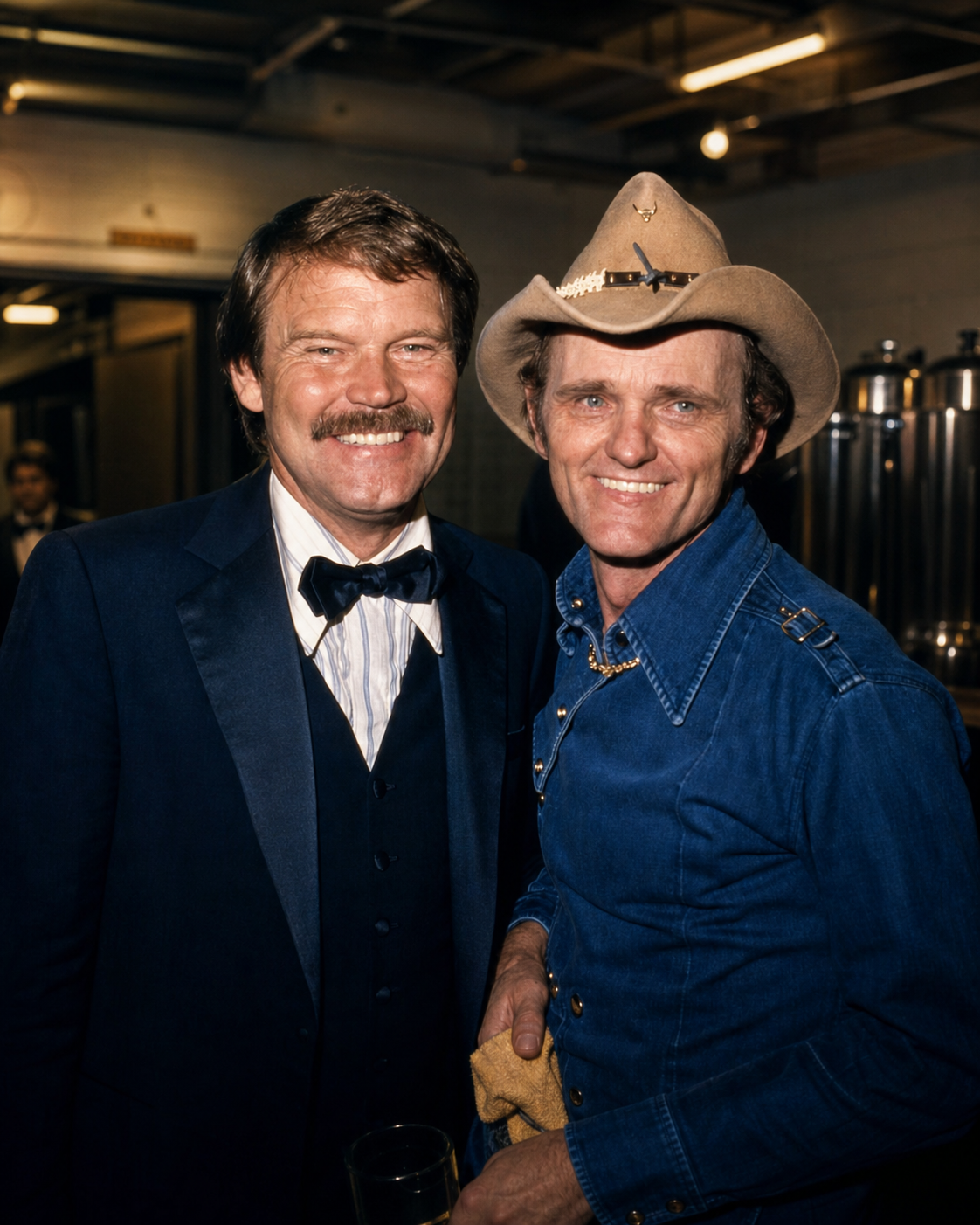
The Night Jerry Gave Up the Bandit — Atlanta, Georgia, 1976
In the heart of Atlanta, Georgia, in 1976, a pivotal moment unfolded that would forever alter the landscape of American cinema and country music. It was a time when the black Pontiac Trans Am was not yet a cultural icon, and the song “East Bound and Down” was still a creative spark waiting to ignite. The story begins with Jerry Reed, not just a country singer, but a multi-talented performer with charm, a sense of humor, and a captivating presence that made him a standout in both Nashville and Hollywood.
Jerry Reed: The Entertainer
Jerry Reed was more than a mere musician; he was an entertainer in every sense of the word. With a guitar in hand and a twinkle in his eye, Reed could command a room and engage an audience effortlessly. His skillful guitar work, combined with his comedic timing, set him apart from his contemporaries. In the mid-1970s, Reed was carving out a name for himself, and he was poised for a breakout role that would showcase his talents on the big screen.
Smokey and the Bandit: A New Kind of Film
Enter Hal Needham, the legendary stuntman turned director, who had a vision for a film that would blend action, comedy, and Southern charm. The script for Smokey and the Bandit was a wild ride, centering around a bootlegging escapade that involved a runaway bride and a relentless sheriff. Initially, Reed was set to play the lead role of the Bandit, a character that seemed tailor-made for his talents. With a modest budget of one million dollars, the film seemed like a risky but exciting venture.
However, everything changed when Burt Reynolds read the script. At that time, Reynolds was one of the biggest stars in Hollywood, and his involvement transformed the project overnight. The budget skyrocketed to $5.3 million, and the studio quickly requested that Reed step aside for the more commercially viable Reynolds. It was a significant shift, and while many might have felt bitterness at being sidelined, Reed took the change in stride.
A Gracious Step Aside
Jerry Reed made the decision to step aside gracefully, accepting a smaller yet pivotal role as Cledus “Snowman” Snow, the loyal truck-driving partner to Reynolds’ Bandit. While he may not have been in the lead, Reed infused Snowman with warmth, humor, and authenticity, transforming what could have been a mere sidekick into a beloved character in his own right. Snowman became the heart of the film, embodying the spirit of camaraderie and loyalty.
The Birth of a Classic: “East Bound and Down”
But Reed’s contributions to Smokey and the Bandit didn’t stop at acting; he also penned the film’s iconic theme song, “East Bound and Down.” The song encapsulated the essence of the film, with its fast-paced beat and playful lyrics that mirrored the thrill of the chase. According to legend, Hal Needham was so enamored with the song that he warned Reed, “If you change one note, I’ll kill you.” The tune became inseparable from the film’s identity, resonating with audiences and capturing the carefree spirit of the South.
A Cinematic Phenomenon
Upon its release in 1977, Smokey and the Bandit became a cultural phenomenon, grossing $127 million and securing its place as the second-highest-grossing film of the year, only behind the monumental Star Wars. The film’s success solidified Burt Reynolds’ superstar status and gave Jerry Reed one of the most cherished roles of his career. Their friendship, forged in the fires of Hollywood’s competitive landscape, became a testament to loyalty and mutual respect.
A Lasting Legacy
Years later, in a heartfelt gesture, Burt Reynolds gifted Jerry Reed a black 1977 Pontiac Trans Am, the very model that had become synonymous with the film. This was not merely a car; it was a token of gratitude and recognition for Reed’s contributions, a reminder of the night he graciously gave up the lead role. Jerry Reed cherished this gift, keeping it in his Nashville garage until his passing in 2008.
The Unseen Note
Accompanying the car was a note penned by Reynolds, a personal message that has largely remained private, known only to those closest to Reed. This detail adds an intimate layer to their friendship, highlighting that not all acts of kindness need to be publicly paraded. The contents of that note may never be revealed, but the sentiments of respect, gratitude, and shared history are palpable.
Conclusion: More than Just a Film
In the end, Jerry Reed’s decision to step aside for a friend did not diminish his legacy. Instead, it solidified his role as a true artist and a supportive ally. He became the Snowman, wrote a song that would echo through generations, and contributed to a film that remains a classic. The black Trans Am stands as a symbol of their enduring friendship, a reminder that in the entertainment industry, loyalty and grace often create legends far beyond the spotlight.
The story of Jerry Reed and Smokey and the Bandit serves as a powerful reminder that while leading roles can elevate a star, the bonds we forge and the sacrifices we make can shape a legacy that lasts long after the credits roll.