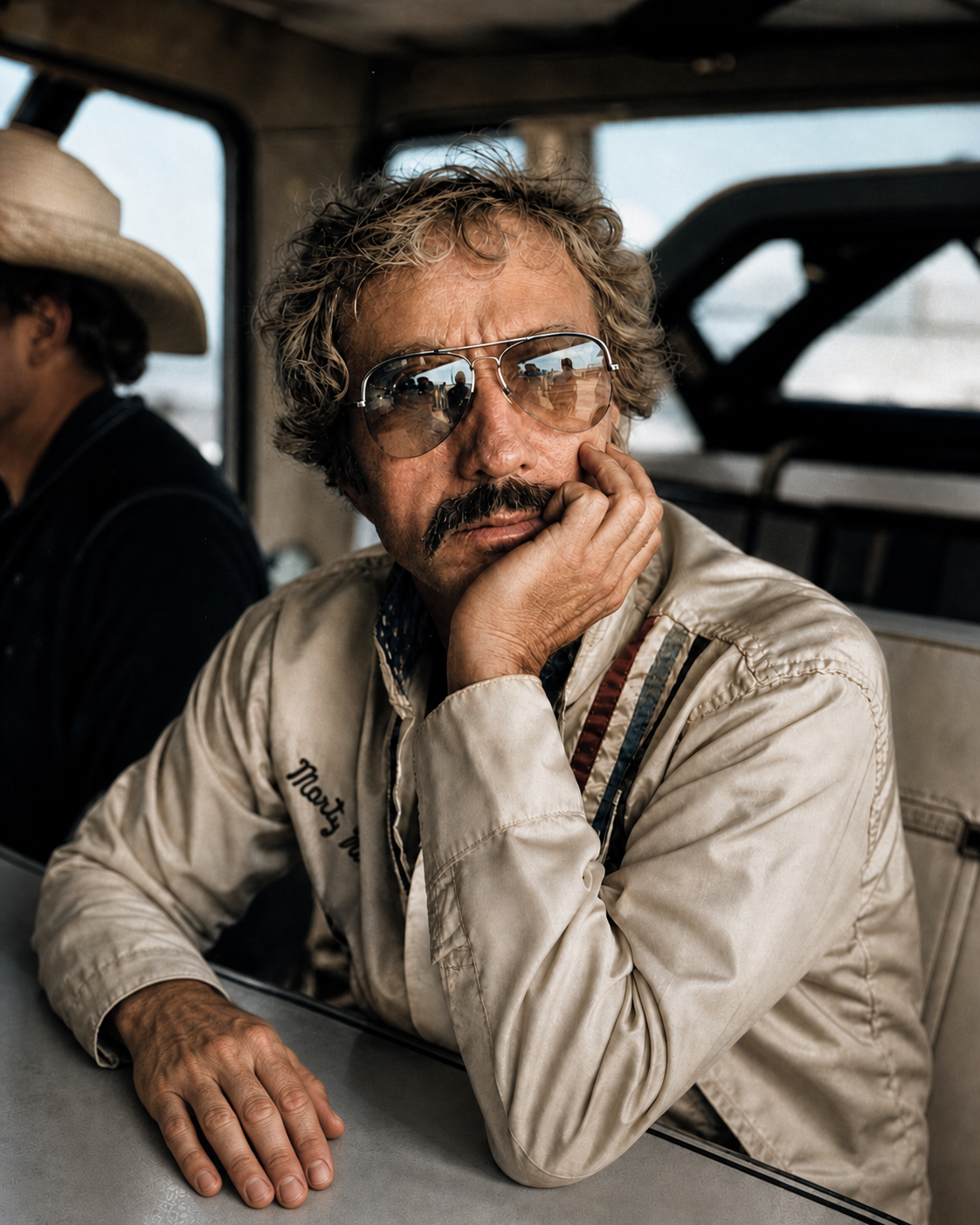
Marty Robbins: The Golden Voice and His Unforgettable Legacy
When we think of country music legends, the name Marty Robbins undoubtedly rises to the surface. Known for his smooth, golden voice and compelling storytelling, Robbins was not merely a singer; he was the embodiment of the Western spirit. His iconic ballad “El Paso” not only captivated audiences but also challenged the norms of radio in a way that few artists dare to do. As Johnny Cash famously declared, he was the greatest country singer who ever lived.
A Humble Beginning
Born Martin Robinson in Glendale, Arizona, in 1925, Robbins was one of nine children raised in a poverty-stricken household. Life was tough, and from a young age, he was tasked with picking cotton before school to contribute to his family. With every coin he saved, he dreamt of a bigger world, one that was often depicted in Gene Autry films. These early experiences laid the groundwork for his later artistic endeavors, inspiring him to weave tales of love, loss, and morality into his music.
The Birth of “El Paso”
In 1959, Robbins penned “El Paso,” a Western ballad that stretched an impressive four minutes and forty seconds—twice the length of a conventional hit. This ambitious undertaking was met with skepticism; Columbia Records urged him to shorten the track, convinced that radio programmers would never play a song of such length. However, Robbins stood firm. “No,” he replied, understanding that some stories are too rich to be condensed.
The public resonated with Robbins’ vision. “El Paso” soared to number one on both country and pop charts, earning him two Grammy Awards and solidifying his status in music history. This ballad became one of his signature songs, encapsulating themes of love, jealousy, and moral consequence, all set against the backdrop of the American West.
From Music to Motorsports
As much as Robbins was dedicated to his music, he had another passion: racing. This was not simply a hobby or a publicity stunt; it was a genuine love for speed, discipline, and the adrenaline rush that came with it. Robbins purchased a stock car and began racing on weekends, often finishing a NASCAR race and rushing across town to perform at the Grand Ole Opry, still clad in his fire suit.
Imagine the scene: a country music icon stepping out of a race car, heart still racing from the track, only to step onto a stage where fans awaited his unforgettable voice. Both worlds—music and racing—demanded courage and heart, showcasing the multifaceted nature of this remarkable man.
The Defining Moment
The year 1974 marked a pivotal moment in Robbins’ life. During a high-speed race, another driver’s car stalled directly in front of him. In that split second, Robbins had a choice: take the clear path around the stalled car or make a decision that could cost him everything. In a remarkable display of courage, he yanked the wheel hard right and crashed into the concrete wall, sacrificing his own safety to spare the life of another driver.
This decision would come to define the man he was, transcending his musical legacy. In a sport where instinct and reactions are crucial, Robbins chose mercy over self-preservation. He demonstrated that true heroism often lies in the choices we make when the stakes are highest.
A Lasting Legacy
Just months after being inducted into the Country Music Hall of Fame, Robbins passed away at the age of 57. His contributions to music are still celebrated today, with fans recalling not only his rich discography but also the depth of his character. Songs like “El Paso” continue to resonate, illustrating the timelessness of his artistry and the stories he shared.
Robbins’ legacy extends beyond his musical catalog; it includes the lessons he imparted through his actions. He was a man who raced not merely for victory but for the sheer thrill of life. In his final moments, he embodied the very essence of heroism, choosing to protect another instead of pursuing personal glory.
Conclusion
Marty Robbins could have been remembered solely for his remarkable voice and chart-topping hits. Yet, it is his incredible story—marked by sacrifice, bravery, and authenticity—that makes him truly unforgettable. He not only sang about heroes; he lived like one. In the landscape of country music, Marty Robbins remains a towering figure, a testament to the power of storytelling and the depth of the human spirit.