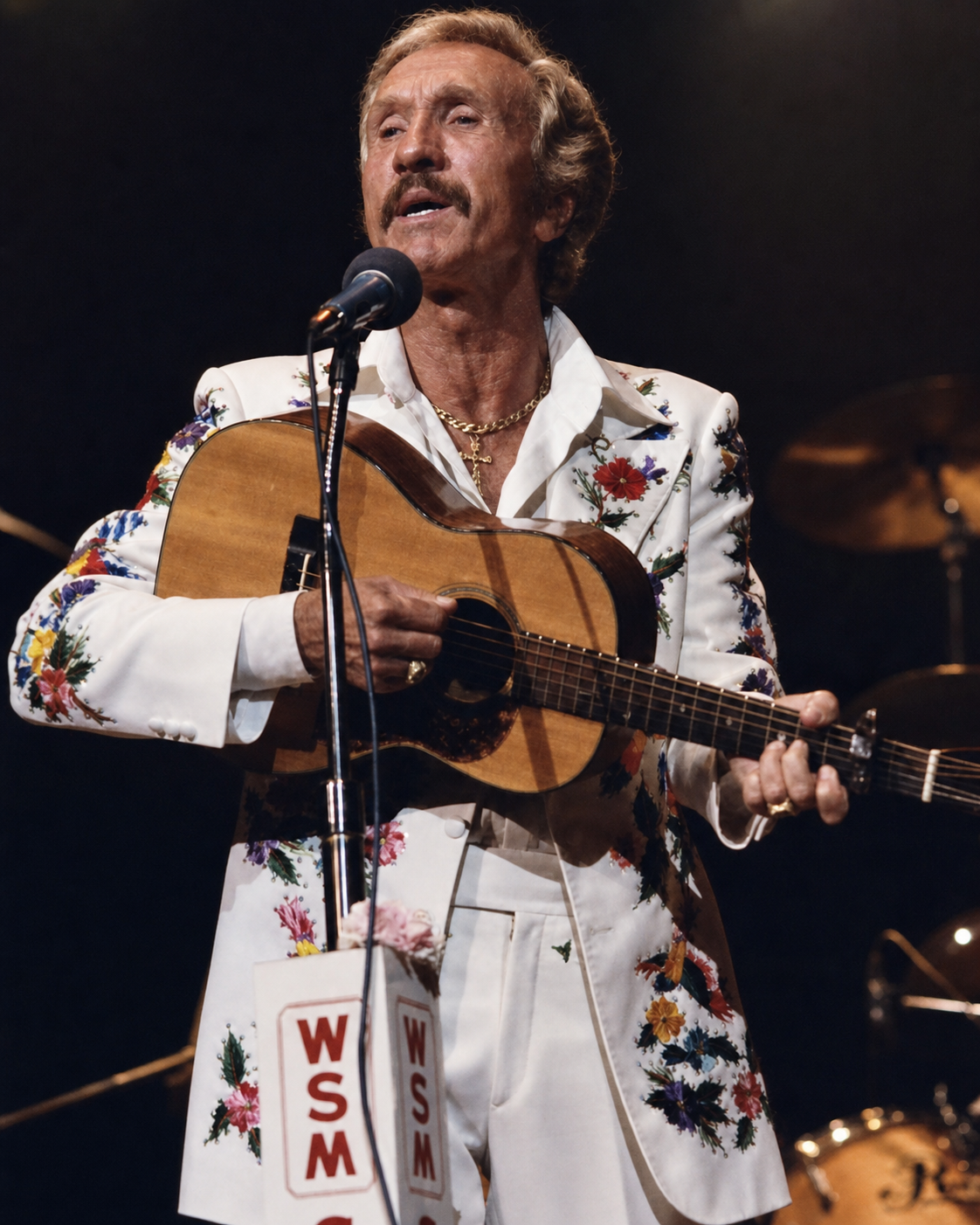
The Enduring Legacy of Marty Robbins
On December 8, 1982, the world of country music lost one of its most dynamic and multifaceted artists, Marty Robbins. He passed away at the age of 57 at St. Thomas Hospital in Nashville, Tennessee, following an eight-hour quadruple bypass surgery after suffering a massive heart attack just days prior. This heart attack marked the fourth he had experienced, a testament to a life lived on borrowed time, as Robbins had battled cardiovascular disease since 1969. Despite these health challenges, his passion for music and racing never waned, leading him to create a legacy that continues to resonate.
A Life of Speed, Sound, and Stories
Marty Robbins was a man of many talents, effortlessly transitioning between the roles of a country musician and a NASCAR racer. On stage, he captivated audiences with his western ballads, honky-tonk numbers, and smooth pop-leaning melodies. Offstage, he embraced the adrenaline of stock car racing, pushing the limits of speed with the same calm focus that characterized his performances. However, beneath the glamour and excitement lay a persistent struggle against his health issues, a battle few fans fully understood.
By the early 1980s, Robbins had already faced more than most individuals could bear. He had survived not only multiple heart attacks but also major heart surgery, all while continuing to perform and record music. His fans could see the charisma, the humor, and the energy he exuded, but few were privy to the private fight within. That fight reached its tragic conclusion in December 1982, when Robbins succumbed to complications following his surgery, leaving behind an indelible mark on the music world.
A Legacy Defined by Hits and Honors
Robbins’s career was nothing short of remarkable. He produced 16 number-one country singles and made history when his classic song “El Paso” won the first-ever Grammy Award for a country song. This accolade alone would have secured his place in music history, but Robbins was not one to rest on his laurels. He constantly pushed the boundaries of what country music could be, blending elements of storytelling and emotional depth into his work.
In October 1982, just two months before his passing, Robbins received one of the highest honors in country music: induction into the Country Music Hall of Fame. It was a poignant moment, as he was able to witness the recognition of his contributions to the genre he loved so deeply. This honor serves as a powerful reminder of the impact he made throughout his career, showcasing his ability to connect with audiences and create lasting memories.
The Haunting Final Recording: “Honkytonk Man”
In early 1982, Robbins entered a Nashville studio for what would become one of the most haunting recordings of his career—“Honkytonk Man,” the title track for the Clint Eastwood film in which he also starred. The film tells the story of a fading country singer striving to make one last record before time runs out, a poignant parallel to Robbins’s own journey. At the time, it may have seemed like just another project, but following his death, the song transformed into a farewell that resonated deeply with fans.
“Honkytonk Man” achieved posthumous success, reaching the Top 10 on the country charts. The song’s themes of restlessness, courage, and longing took on a new depth after Robbins’s passing, becoming a fitting epitaph for an artist who had dedicated his life to expressing the complexities of the human experience through music. In a sense, it was Robbins’s final statement, echoing the sentiments he had sung about throughout his career.
A Man of Contradictions
Marty Robbins was a paradox in the best sense. He was both gentle and daring, polished yet wild, romantic yet restless. He embraced life fully, refusing to let health challenges dictate his passions. Robbins’s resilience and charisma made him unforgettable, and his ability to weave intricate stories into his songs solidified his place in the hearts of fans and the annals of music history.
The Last Chapter of a Restless Heart
Though Marty Robbins’s life came to a premature end, his legacy continues to thrive. He did not simply fade from country music history; he left a vibrant body of work filled with emotion, color, and movement. His songs remain alive, resonating with audiences because he poured his heart into every note, making each line meaningful.
On that fateful day in December 1982, while Robbins’s borrowed time may have run out, his story did not conclude in a hospital room. It lives on through the records he created, the films he appeared in, and the memories of fans who continue to celebrate his music. Marty Robbins rode out of the spotlight with a song still playing, reminding us that while life may be fleeting, art endures.
In the end, “Honkytonk Man” encapsulates the essence of Marty Robbins—a performer who stepped into the light one last time, leaving behind a legacy that will never be forgotten.