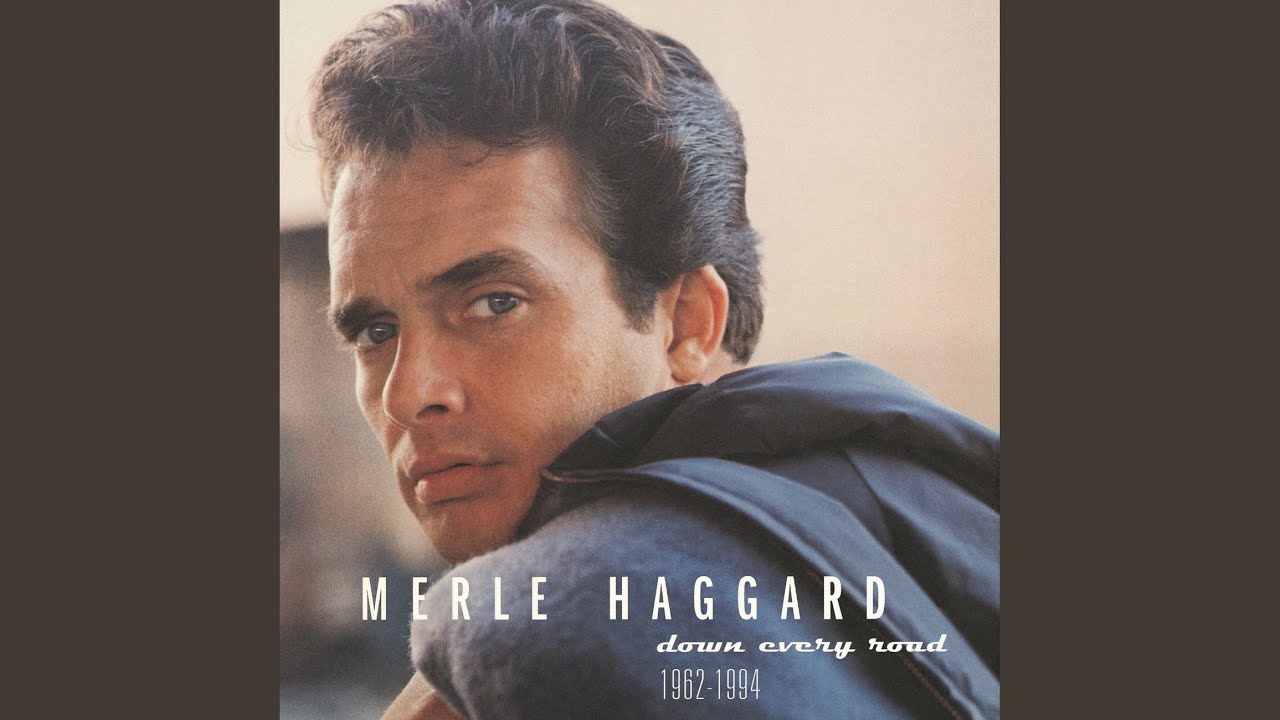
Merle Haggard’s “The Legend of Bonnie and Clyde”: A Deep Dive into a Timeless Classic
—
Merle Haggard’s “The Legend of Bonnie and Clyde” is a song that has captivated audiences for decades with its haunting melody, poignant lyrics, and the enduring legend of the infamous outlaws it portrays. Released in 1968, this song not only showcased Haggard’s storytelling ability but also cemented his position as one of the most influential figures in country music. The song’s impact extends beyond the realm of music, reflecting the societal upheavals and the fascination with the anti-hero figure that characterized the late 1960s. This article delves into the intricacies of “The Legend of Bonnie and Clyde,” exploring its historical context, musical composition, lyrical themes, and the lasting legacy it has left on the music world.
The song’s narrative, which romanticizes the notorious crime spree of Bonnie Parker and Clyde Barrow, resonated deeply with a generation disillusioned with mainstream values and seeking rebellion. Haggard’s unique ability to craft songs that spoke to the everyday man, coupled with his distinctive baritone voice, made “The Legend of Bonnie and Clyde” an instant classic. It’s a testament to Haggard’s genius that the song remains widely popular today, its themes of freedom, rebellion, and the American Dream continuing to captivate new generations of music lovers.
Merle Haggard: A Cornerstone of Music History
Merle Haggard was born on April 6, 1937, in Oildale, California, to Fenton and Harriet Haggard. His early life was marked by hardship and tragedy, including the loss of his father at a young age. This adversity would later influence his music, which often reflected themes of struggle, redemption, and the human condition. Haggard’s entry into music was through his exposure to the blues and country genres, influenced by artists such as Jimmie Rodgers and Lefty Frizzell. His unique voice and style, which blended traditional country with elements of blues and folk, would eventually earn him the title of one of the most important country artists of all time.
Haggard’s career spanned over five decades, during which he released 76 studio albums, 10 live albums, 24 compilation albums, and 38 number-one hits on the Billboard country music charts. His influence on country music is immeasurable, with artists such as George Strait, Alan Jackson, and Emmylou Harris citing him as a major inspiration. Haggard’s legacy extends beyond his music; he was also a pivotal figure in the Bakersfield sound, a subgenre of country music characterized by its rootsy, uncompromising style, which stood in stark contrast to the slick, produced sound of Nashville at the time.
The Origin and Composition of “The Legend of Bonnie and Clyde”
“The Legend of Bonnie and Clyde” was written by Merle Haggard and was included on his 1968 album “The Legend of Bonnie & Clyde.” The song tells the story of Bonnie Parker and Clyde Barrow, the notorious outlaws who terrorized the American Southwest during the Great Depression. Haggard was inspired to write the song after reading about the duo’s exploits in the newspaper. He was fascinated by their story, which he saw as a symbol of rebellion against the harsh economic conditions and social injustices of the time.
The composition of the song is notable for its simplicity and effectiveness. The melody is haunting and memorable, with a repetitive structure that builds tension and underscores the tragic inevitability of the outlaws’ fate. The lyrics are a masterclass in storytelling, with Haggard using vivid imagery and clever wordplay to bring the story to life. The song’s chorus, which recounts the final moments of Bonnie and Clyde’s lives, is particularly striking, with Haggard’s vocal delivery conveying a sense of sadness and loss.
In the Studio: Recording and Production
The recording of “The Legend of Bonnie and Clyde” took place in 1967 at the Capitol Records studio in Los Angeles. Haggard was backed by his band, The Strangers, which included legendary musicians such as Roy Nichols on guitar and Norman Hamlet on steel guitar. The production was handled by Ken Nelson, a veteran producer who had worked with Haggard on many of his previous albums. Nelson’s approach was to keep the production simple and unobtrusive, allowing Haggard’s voice and the story to take center stage.
The iconic sound of the song is due in large part to the instrumental arrangements. The use of pedal steel guitar and fiddle adds a sense of melancholy and longing, while the minimalist drum pattern and bass line provide a sense of urgency and momentum. Haggard’s vocal delivery is characteristically expressive, conveying the emotions and nuances of the story with remarkable subtlety. The vocal arrangements are also noteworthy, with Haggard’s baritone voice soaring on the choruses and dropping to a whisper on the verses, creating a sense of intimacy and drama.
Lyrical and Thematic Analysis
The lyrics of “The Legend of Bonnie and Clyde” are a deep dive into the psyche of the American outlaw. Haggard’s portrayal of Bonnie and Clyde is sympathetic, depicting them as folk heroes who are driven to crime by desperation and a desire for freedom. The song’s themes of rebellion, nonconformity, and the struggle against authority resonated deeply with the counterculture movement of the 1960s, which saw Bonnie and Clyde as symbols of resistance against mainstream values.
On a deeper level, the song explores the human condition, touching on themes of love, death, and the search for meaning in a chaotic world. Haggard’s lyrics are full of vivid imagery and symbolism, with the duo’s crime spree serving as a metaphor for the fleeting nature of life and the inevitability of fate. The song’s final verse, which recounts the outlaws’ tragic demise, is a powerful commentary on the senselessness of violence and the devastating consequences of a life of crime.
Musical Structure and Emotional Resonance
The musical structure of “The Legend of Bonnie and Clyde” is deceptively simple, with a repetitive melody and chord progression that builds tension and underscores the tragic narrative. The song’s harmony is characterized by the use of minor chords and suspended notes, creating a sense of tension and uncertainty. The rhythm is driven by a steady beat, which propels the song forward and creates a sense of momentum.
Haggard’s vocal delivery is the key to the song’s emotional resonance. His baritone voice is capable of conveying a wide range of emotions, from the tenderness of the verses to the drama of the choruses. The vocal arrangements are also noteworthy, with Haggard’s use of dynamics and phrasing creating a sense of intimacy and drama. The song’s climax, which features Haggard’s soaring vocals and a sweeping orchestral arrangement, is a masterpiece of emotional manipulation, leaving the listener with a sense of sadness and loss.
Chart Performance and Global Reception
“The Legend of Bonnie and Clyde” was a major commercial success, reaching number one on the Billboard country music charts in 1968. The song stayed on the charts for 14 weeks, earning Haggard his fifth number-one single. The song’s success was not limited to the United States; it also charted in several other countries, including Canada and Australia.
The song’s global reception was overwhelmingly positive, with critics praising Haggard’s storytelling ability and the song’s haunting melody. The song has been covered by numerous artists, including Johnny Cash, Willie Nelson, and Dolly Parton, and has been featured in several films and television shows. The song’s enduring popularity is a testament to Haggard’s genius as a songwriter and performer, and its influence can be heard in a wide range of musical genres, from country and folk to rock and pop.
Cultural Legacy and Enduring Impact
“The Legend of Bonnie and Clyde” has had a profound influence on American music and culture. The song’s portrayal of Bonnie and Clyde as folk heroes has become an integral part of the American mythology, symbolizing the rebellion and nonconformity that defined the 1960s. The song’s influence can be heard in a wide range of musical genres, from country and folk to rock and pop.
The song’s impact extends beyond the realm of music. The song’s themes of rebellion and nonconformity have inspired countless artists, writers, and filmmakers, who have used the story of Bonnie and Clyde as a metaphor for the human condition. The song’s influence can be seen in films such as “Bonnie and Clyde” (1967) and “The Town” (2010), which feature the outlaws as central characters. The song’s legacy is a testament to the power of music to shape and reflect cultural values, and its enduring popularity is a reminder of the timeless appeal of a well-crafted story.
Conclusion: Why “The Legend of Bonnie and Clyde” Still Matters Today
“The Legend of Bonnie and Clyde” is a song that continues to captivate audiences with its haunting melody, poignant lyrics, and the enduring legend of the infamous outlaws it portrays. The song’s impact on American music and culture is immeasurable, and its influence can be heard in a wide range of musical genres. The song’s themes of rebellion, nonconformity, and the struggle against authority continue to resonate with listeners today, serving as a reminder of the power of music to shape and reflect cultural values.
As a cultural artifact, “The Legend of Bonnie and Clyde” offers a unique window into the societal upheavals of the 1960s, reflecting the fascination with the anti-hero figure and the desire for rebellion and nonconformity that defined the era. The song’s legacy is a testament to the enduring appeal of a well-crafted story, and its influence can be seen in a wide range of artistic expressions, from music and film to literature and visual art.
In conclusion, “The Legend of Bonnie and Clyde” is a song that continues to matter today, its themes and melodies remaining as relevant and captivating as they were when the song was first released. The song’s impact on American music and culture is a reminder of the power of music to shape and reflect cultural values, and its enduring popularity is a testament to the timeless appeal of a well-crafted story. As a work of art, “The Legend of Bonnie and Clyde” is a masterpiece of storytelling, a song that continues to haunt and inspire listeners with its haunting melody and poignant lyrics.