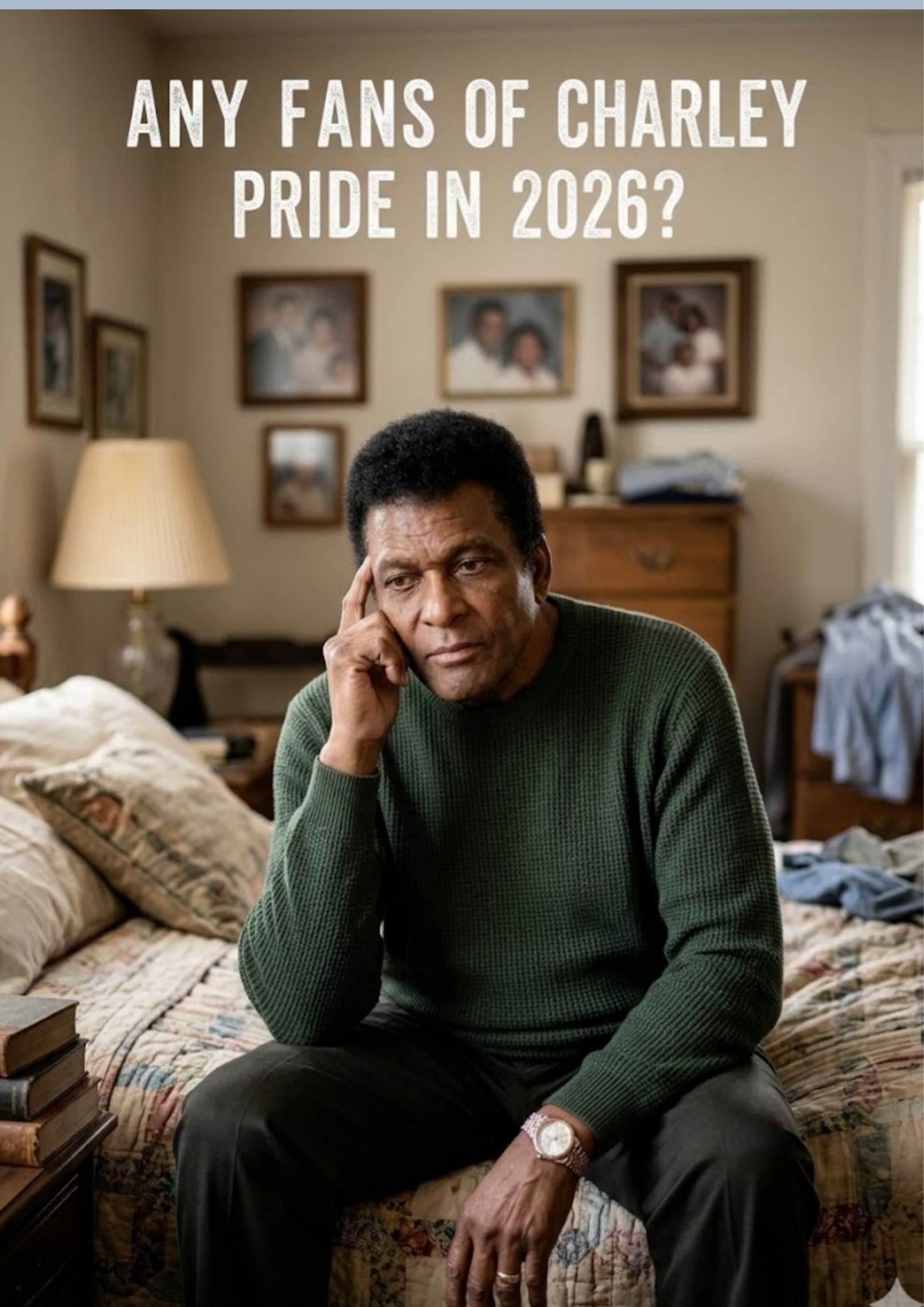
The Voice They Trusted Before They Knew His Name
Throughout music history, there are pivotal moments that redefine the landscape of an entire genre. These moments often arise not from ostentatious displays or grand protests, but rather from the undeniable power of a voice that commands attention. The story of Charley Pride exemplifies such a moment—a tale that begins not under the glare of stage lights, but in the cotton fields of Sledge, Mississippi, where dreams are nurtured amidst the hardships of everyday life.
A Voice Born from Resilience
At the heart of Pride’s journey lies a remarkable truth: RCA Records released his first records without even including a photograph on the cover. This unconventional choice was not merely a strategic decision; it was a profound act of trust. Before audiences ever laid eyes on him, they were captivated by his voice—one shaped by labor, longing, and an unwavering dignity. In their hearts, listeners opened the door to a new possibility, one that would soon transform the country music scene.
What makes Pride’s story even more compelling is the backdrop of his early life. Born the fourth of eleven children in a sharecropping family, Pride’s upbringing was devoid of the privileges often associated with aspiring artists today. In a world where survival overshadowed ambition, he toiled in cotton fields from sunrise to sunset, yet within those demanding days, a dream began to blossom.
The Guitar: A Symbol of Perseverance
Consider the guitar that became a symbol of Pride’s resolve. This was not a gift, nor an inheritance; it was a dream earned through toil. For two years, he saved coins from his meager earnings to purchase it from a Sears catalog. This image of a young man clinging to a distant aspiration speaks volumes about Charley Pride’s character. He wasn’t passively waiting to be discovered; he was actively preparing for the moment when discovery would finally arrive.
A Journey through Sports
Initially, music was not Pride’s primary pursuit. Like many young men of his era, he sought a future in professional baseball and earned a place in the Negro American League. This chapter of his life, though often glossed over, played a crucial role in shaping his discipline and composure. It instilled in him the understanding that success is not guaranteed but is instead pursued through hard work and dedication.
The Breakthrough Moment
Then came 1965—a year that would alter the course of country music. A demo tape, created with the help of producer Cowboy Jack Clement, caught the attention of Chet Atkins at RCA Records, leading to an unprecedented contract offer. The industry, however, was rife with uncertainty. It wasn’t the quality of Pride’s voice that was in question; it was the context surrounding it. The era was fraught with unspoken rules about who was deemed acceptable in country music. Yet, a groundbreaking decision was made: release the music first, without a photograph, allowing the songs to resonate on their own.
The Reluctant Star
Listeners welcomed Pride’s songs into their homes, connecting with the authenticity of his sound before they ever saw his face. By the time audiences realized who was behind the voice, the bond had already been forged. This strategy, while unconventional, revealed a profound truth that the industry itself had doubted: a great country voice does not seek permission; it simply makes its presence known.
Throughout his journey, there were calls for him to adjust his name, soften his image, or conform to a more palatable version of himself. Pride’s response was resolute: “no.” His refusal was not a quest for attention; it was a declaration of identity. He had fought too hard to become a shadow of someone else’s expectations.
The Grand Ole Opry: A Defining Moment
The stage that would ultimately test Pride arrived in the form of the Grand Ole Opry. On January 7, 1967, he stepped into one of country music’s most revered venues and performed a song by Hank Williams. What transpired next is often described in various ways, but at its core, it was a moment of silence, followed by an eruption of recognition and applause that echoed through the hall. This performance did not merely introduce Charley Pride; it confirmed his place in the annals of country music history.
Beyond the Numbers
The accolades that followed—twenty-nine number-one hits, the title of Entertainer of the Year, and an induction into the Country Music Hall of Fame—are undeniably impressive. Yet, they barely scratch the surface of the legacy he left behind. Pride carried with him the weight of cultural significance, gracefully navigating the complexities of an industry that had often sidelined artists like him.
A Legacy of Authenticity
When referred to as the “Jackie Robinson of country music,” Pride responded with humility, acknowledging the historical parallels while insisting on being recognized primarily for his music. His desire was to be celebrated for his artistry—the years of dedication, the authenticity of his voice, and the relentless pursuit of excellence.
The Indelible Impact
Charley Pride’s legacy serves as a reminder of the difference between demanding recognition and earning it through sheer talent and perseverance. He didn’t implore the world to make space for him; he confidently stepped into the room, and once he sang, there was no doubt about his rightful place. His story continues to resonate deeply today, reminding us that long before audiences saw his face, they made a choice that was far more significant—they listened. In doing so, they altered the trajectory of country music forever.