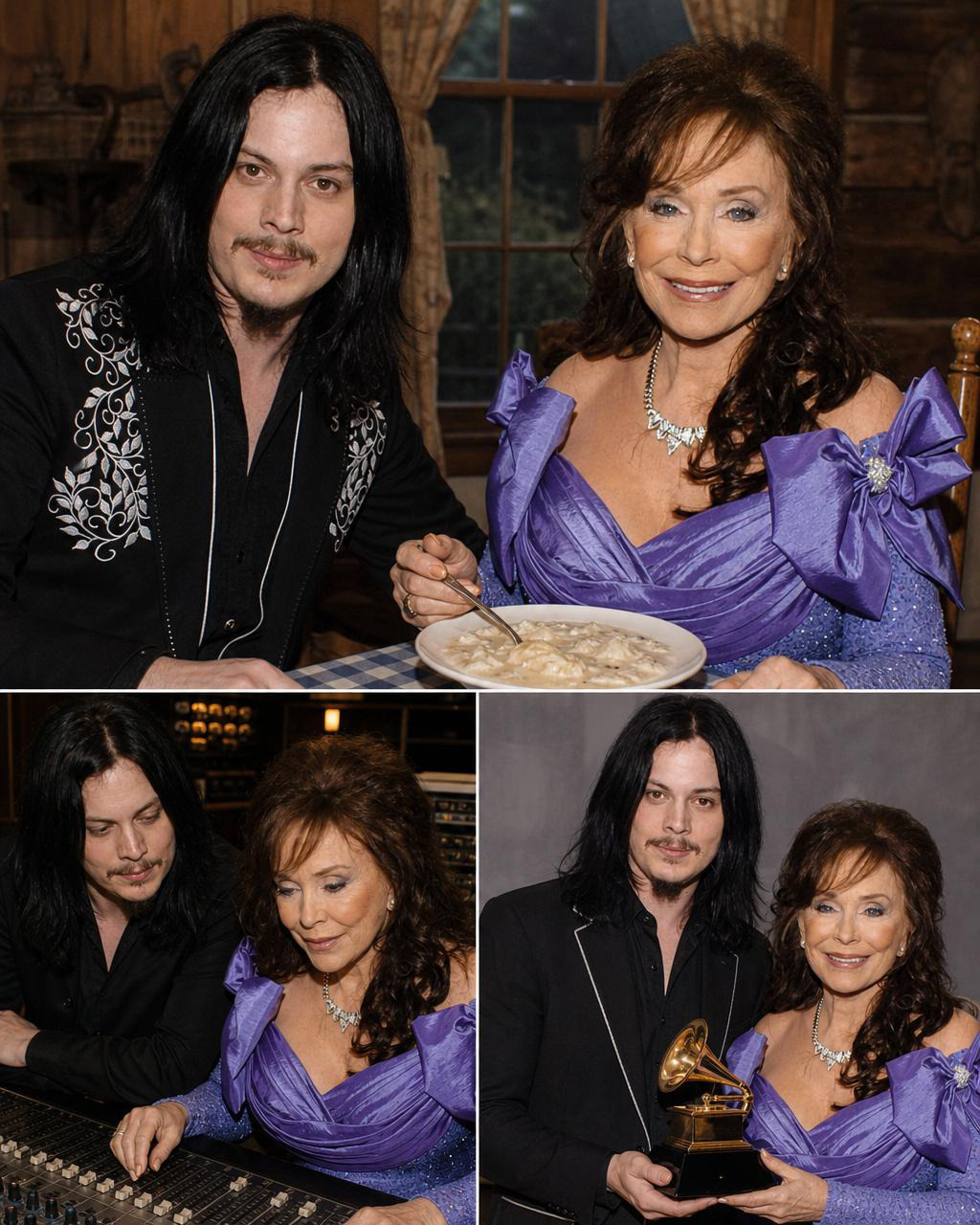
Nashville Buried Her at 70; Jack White Dug Her Up at 72
In the world of country music, few names resonate as deeply as Loretta Lynn. Known as the coal miner’s daughter from Butcher Hollow, Kentucky, Lynn transformed her life experiences into poignant songs that captured the essence of marriage, motherhood, hardship, and pride. Her narrative was not just personal; it reflected the struggles and triumphs of many women who often felt compelled to remain silent. From her early beginnings, Loretta Lynn emerged as a trailblazer, becoming the first woman to be named CMA Entertainer of the Year. Yet, by the early 2000s, the industry that once revered her began to speak of her in the past tense.
The Industry’s Oversight
By 2003, Nashville had seemingly moved on. Radio stations were no longer playing her music, and record labels stopped reaching out. The vibrant voice that had once echoed through the halls of country music was now muted, overshadowed by a new wave of younger stars chasing pop-infused sounds. Loretta had not released a new studio album in several years, and the industry appeared uncertain about how to incorporate her into the modern landscape. Yet, unbeknownst to many, Loretta Lynn was far from finished.
A Young Rock Star at the Door
Enter Jack White, a 28-year-old rock musician from Detroit, whose distinct sound with The White Stripes had garnered him attention far beyond the garage rock scene. At first glance, White and Lynn seemed to inhabit entirely different worlds: he was synonymous with gritty distortion and edgy rhythms, while she was an emblem of country tradition, rooted in heartfelt storytelling. However, what White heard in Lynn was something that transcended genre—a raw authenticity that many in the industry had overlooked.
When Jack White visited Lynn at her Dude Ranch in Tennessee, their interaction was refreshingly human. Instead of a corporate pitch, he was welcomed into her home with a warm meal of chicken and dumplings and homemade bread. The atmosphere was relaxed, and through shared stories and laughter, a bond of trust began to form. White approached Lynn not as a relic of the past but as a vibrant artist whose voice still carried immense power.
The Choice That Changed Everything
For Loretta Lynn, trusting Jack White with her legacy was no small feat. She had spent decades curating her voice, her songs, and her story amidst the often harsh criticisms of the music industry. Many people believed they knew what was best for her career, suggesting she should conform to modern trends or retire gracefully. However, Lynn responded with characteristic defiance—she refused to allow the industry to dictate her worth or her narrative.
This defiance culminated in the release of Van Lear Rose in April 2004. The album was not merely a nostalgic look back at her career; it was a bold proclamation of her continued relevance and creativity. Every song was penned by Lynn herself, while White’s production brought a raw, unfiltered energy that allowed her voice to shine front and center. The album resonated with listeners, capturing the dust, memory, humor, ache, and pride that defined her artistry.
A Late-Career Triumph
The impact of Van Lear Rose was profound. It reached beyond country listeners, captivating rock enthusiasts, critics, and new fans alike. The album not only soared to #2 on the country charts and #24 on the Billboard 200—marking Lynn’s highest crossover success in three decades—but it also garnered critical acclaim, earning two Grammy Awards. More importantly, it served as a powerful reminder that Loretta Lynn was not merely a relic of a bygone era; she was still a vital force in the music landscape.
What made this moment even more remarkable was the quiet defiance embedded within it. Lynn did not chase the sounds of younger stars or dilute her history to fit a new mold. She didn’t seek permission to matter again; she simply created the album she wanted to make. In doing so, she redefined what it meant to be a woman in the music industry, proving that age does not equate to irrelevance.
Legacy and Impact
With Van Lear Rose, Loretta Lynn demonstrated that her story was far from over. Rather than a comeback, this album was a testament to her refusal to be overlooked. At 72, Lynn kickstarted a new chapter in her illustrious career, reminding everyone that the narrative of a woman’s life does not expire with time. Jack White, recognizing her authenticity, stepped back just enough to allow her true self to shine through.
The real story behind Van Lear Rose transcends mere trends or marketing stunts. It embodies a powerful declaration that a life filled with truth and experience does not fade away. Loretta Lynn had already made history long before 2004, but through this album, she solidified her legacy as an artist who defined her own narrative.
In a world quick to overlook the contributions of women, especially as they age, Loretta Lynn’s story remains a vital reminder: no one gets to decide when a woman’s song is over. Her music continues to resonate, proving that her voice, like her spirit, is timeless.