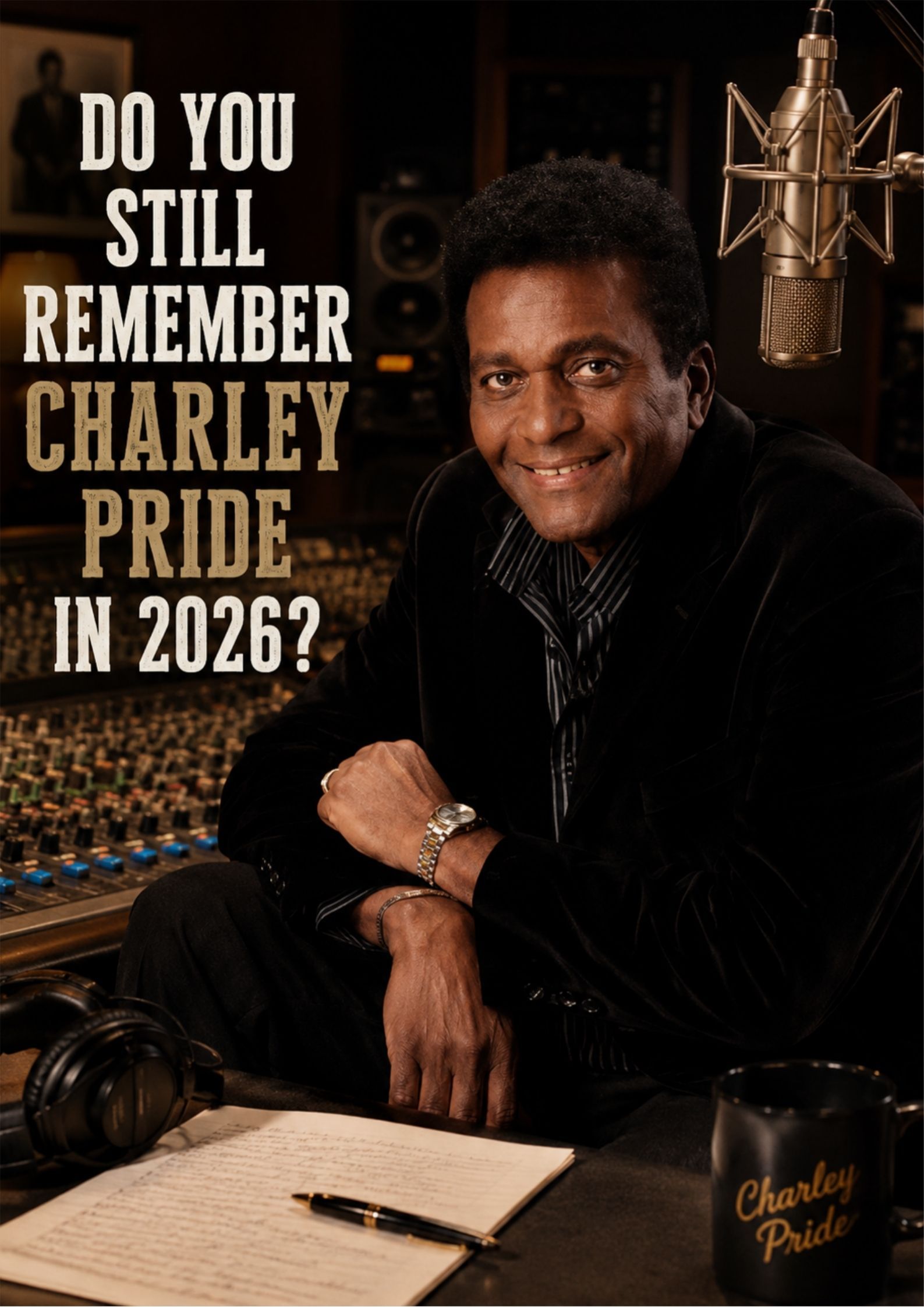
Charley Pride’s Final Echo: The Voice That Rose from Mississippi and Carried Country Music Home
Some voices transcend mere singing; they journey through the annals of history, carrying the weight of back roads, the toil of hard work, the dignity of family, and the quiet courage of those who refuse to let the world dictate the limits of their dreams. Charley Pride was one such voice. His warm, steady, and unmistakably human sound didn’t arrive with force; it arrived with an authenticity that resonated deeply. This is why “Charley Pride’s Last Song — A Voice That Carried Him Home” feels less like a title and more like the final chapter of an American life that, while rooted in song, was far larger than music itself.
From Humble Beginnings
Charley Pride’s journey began far from the glimmering lights of Nashville, in the small Delta town of Sledge, Mississippi. Born on March 18, 1934, as the fourth of eleven children in a sharecropping family, his early life was steeped in the sounds of the South. Long before the accolades, the awards, and the title of “The Voice of Country,” there was a young boy surrounded by cotton fields and the hum of responsibility.
A Philco radio, a gift from his father, became more than just an appliance; it was a gateway to another world. Through it, young Charley was introduced to the Grand Ole Opry, the music of Hank Williams, and the storytelling of Roy Acuff. These sounds spoke to him, resonating with the experiences of the working-class—those who knew sorrow, humor, devotion, and hope. In this sense, country music embraced Charley Pride long before he found a place in its heart.
A Journey Paved with Hard Work
Pride’s path to stardom was anything but straightforward. His life took him from the cotton rows of Mississippi to the baseball fields of the Negro American League, and then to a smelting plant in Montana. Each phase of his journey contributed to shaping the man he would become. He understood the grit required to achieve a dream that seemed elusive. He experienced the sting of being overlooked and underestimated, yet he persevered, never losing the gentleness that made him extraordinary.
When Charley Pride stepped onto the country music scene, he did more than achieve success; he redefined what success could look like. In a genre deeply rooted in tradition, Pride emerged as a groundbreaking figure. He didn’t reject the foundations of country music; rather, he proved that he belonged within them. His voice was imbued with the same honesty, tenderness, and wisdom that characterized the best country songs. He didn’t sound like an outsider imitating a style; he sounded like a man who had lived the stories he sang.
The Heart of a Beloved Artist
What endeared Charley Pride to audiences was his inherent dignity. He brought calm to heartbreak, brightness to simple joys, and sincerity to every lyric. Hits like “Kiss an Angel Good Mornin’” felt authentic, as if they had been lived rather than crafted. His delivery possessed a rare ease, stemming from an understanding that genuine emotion doesn’t need embellishment to be impactful. For older listeners, this kind of singing is invaluable. It evokes a time when a voice could command attention, when a song could convey truth without adornment, and when country music felt like intimate conversations shared across kitchen tables.
Legacy Rooted in Humility
Even as his fame took him far from Sledge, Mississippi, the Delta never left him. It remained an integral part of his emotional landscape. Friends and fans remembered how he returned in spirit through his songs, the stories he recounted, and the humility he maintained throughout his life. The cotton fields, the family radio, the long road ahead, and the boy who dreamed beneath the vast Mississippi sky were never overshadowed by his fame; instead, they became woven into the very fabric of his sound.
A Final Farewell
Charley Pride passed away on December 12, 2020, in Dallas due to complications from COVID-19. His loss felt profoundly personal to millions. At the age of 86, he had just delivered what would be his final performance at the CMA Awards, singing “Kiss an Angel Good Mornin’” one last time. This performance took on new significance, transforming into a poignant farewell. The song, always joyful, now echoed as a final wave from a man whose life had been a testament to resilience, hardship, and grace.
As “The Voice of Country” fell silent, the impact of his final performance lingered. It encapsulated everything Charley Pride represented: warmth, gratitude, resilience, and the ability to make a familiar song feel newly sacred.
The Unspoken Truths and Lasting Legacy
As we reflect on his life, one might ponder the private truths Charley held dear in his final days. Few knew the whispers he shared with loved ones before stepping onto that last stage—perhaps a quiet truth he had carried since his childhood days in the cotton fields. Yet, the most profound truth may have been evident all along. His life taught us that one’s origins do not limit the reach of one’s voice. His career illustrated that grace can triumph over bitterness, and his music conveyed that a song, when delivered with honesty, can bridge divides that no spoken word ever could.
In the end, Charley Pride’s last song was not solely the final number he performed; it represented the entire arc of his existence—from the cotton fields of Sledge to the bright lights of Nashville, from a family radio to the hearts of countless fans. The words he shared with his family in those final hours may remain the most poignant story he never penned into song. Even without knowing every private sentiment, we are left with a powerful legacy.
Though Charley Pride’s voice has quieted, it has not vanished. It continues to carry home anyone willing to listen closely.