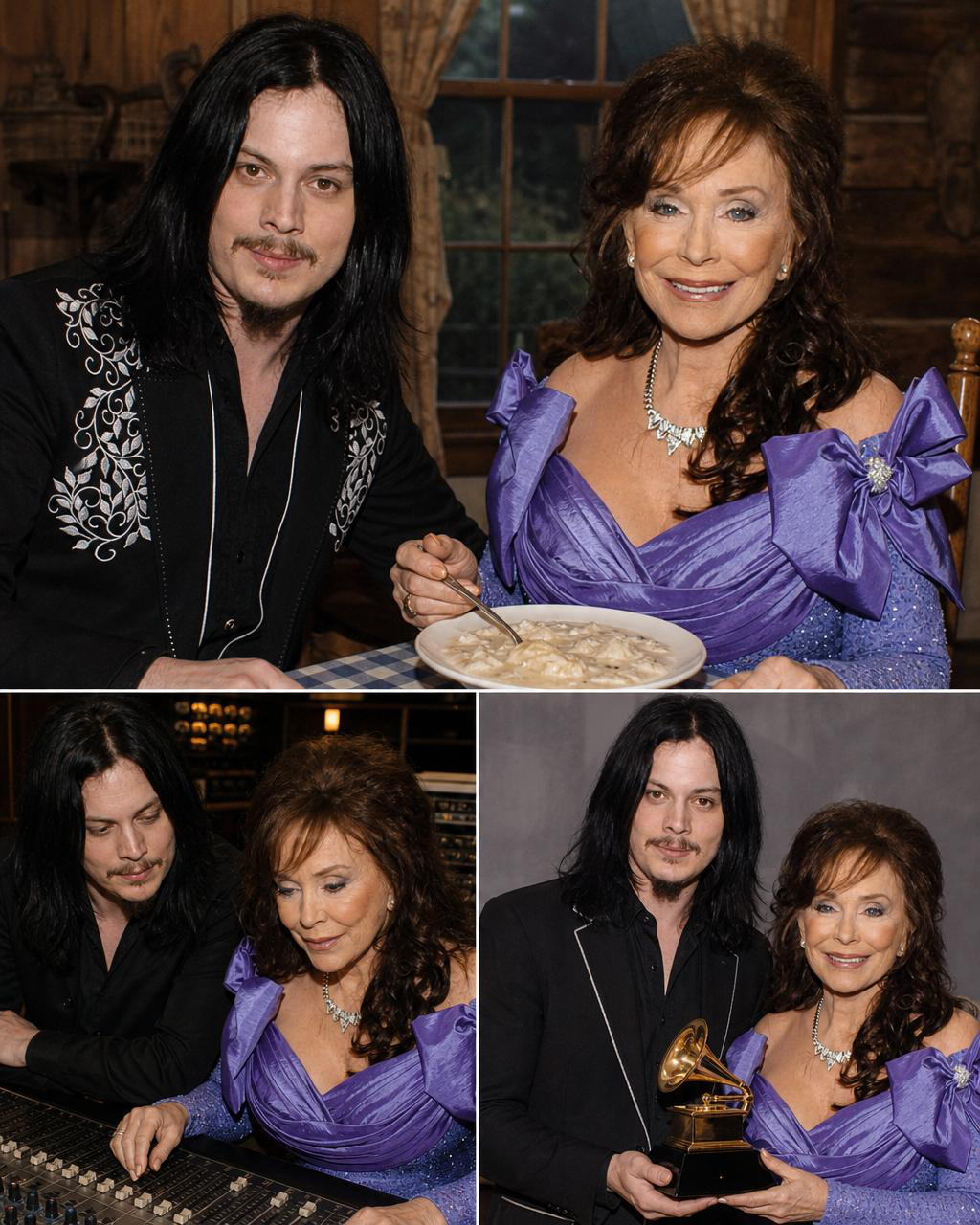
Loretta Lynn: A Timeless Legacy Revived by Jack White
In the world of country music, few names resonate with the depth of Loretta Lynn. Born the coal miner’s daughter in Butcher Hollow, Kentucky, she became an emblem of resilience and authenticity. Lynn’s songs told the stories of marriage, motherhood, hardship, and pride, carving out a voice that echoed the struggles and triumphs of countless women. However, by the early 2000s, the industry that once celebrated her had seemingly moved on, relegating her to the past as Nashville shifted its focus to a younger generation of artists.
A Queen’s Quiet Obituary
As the years rolled into the early 2000s, Nashville made a decision that many artists face: they began to speak about Loretta Lynn in the past tense. With no new studio album in years and a radio landscape increasingly dominated by pop-infused country sounds, Lynn found herself overlooked. The industry that had once crowned her queen now seemed uncertain of her place in the evolving musical landscape.
Enter Jack White
In what can only be described as a fateful intersection of musical worlds, Jack White, the 28-year-old frontman of The White Stripes, knocked on Loretta Lynn’s door. Known for his raw, stripped-down sound, White came from a completely different universe than the traditional country music from which Lynn hailed. Yet, he saw something in her that many had forgotten—a voice still capable of resonating with honesty and power.
When White visited Lynn at her Dude Ranch in Tennessee, their meeting was far from a corporate pitch. Instead, it was an exchange steeped in warmth and authenticity. Over a meal of chicken and dumplings, they shared stories and laughter, allowing a deep trust to blossom. White wasn’t interested in reshaping Lynn into a modern version of herself; he wanted to showcase the vibrancy of her authentic voice.
The Decision to Trust
For Loretta Lynn, trusting Jack White with her legacy was no small feat. She had spent decades fiercely protecting her voice and narrative against the industry’s often harsh realities. Many had tried to dictate how she should sound or what she should do, but Lynn wasn’t ready to conform to outdated expectations. In true Loretta fashion, she chose to resist the notion that a woman past seventy had nothing left to say.
Van Lear Rose: A Groundbreaking Album
In April 2004, the world witnessed the release of Van Lear Rose, an album that would redefine the trajectory of Lynn’s career. It wasn’t merely a nostalgia project; it was a testament to her enduring spirit. Every song was penned by Lynn herself, and with White at the helm as producer, the album combined rawness and authenticity that allowed her voice to shine without compromise.
The album was met with critical acclaim, debuting at #2 on the country charts and #24 on the Billboard 200—her highest crossover performance in thirty years. Metacritic awarded it an impressive 97 out of 100, and it won two Grammy Awards, affirming that Loretta Lynn was not just a relic of the past but a vital force in contemporary music.
A Defiant Legacy
What made Van Lear Rose so impactful was its refusal to conform. Lynn did not chase the sound of younger country stars; she did not dilute her history to fit a market focused on youth. Instead, she reclaimed her narrative, delivering a collection of songs rich with memory, humor, and unflinching truth. The music carried with it a sense of urgency and relevance, reminding listeners that age does not diminish creativity; rather, it enriches it.
More Than a Comeback
Labeling Van Lear Rose as a “comeback” would be misleading. Lynn never truly disappeared; she was merely overlooked by an industry eager to write her off. At 72, she didn’t ask for permission to re-enter the spotlight; she kicked down the door with songs that were unapologetically hers. With White as a trusted ally, Lynn crafted an album that celebrated her legacy while showcasing her evolution as an artist.
A Lasting Impact
Today, Loretta Lynn’s story is not just about her past triumphs but also about her defiance against the constraints of age and industry expectations. Van Lear Rose remains a powerful reminder that a woman’s story does not have an expiration date. Loretta Lynn proved that music is not merely a young person’s game; it is a lifelong journey filled with truths waiting to be told.
In the years following the album’s release, Loretta Lynn continued to be a beacon of inspiration for artists across genres. Her legacy is a testament to the enduring power of storytelling, reminding us that real artistry transcends age and trends. As we reflect on her remarkable journey, one thing is clear: Loretta Lynn’s voice will continue to resonate for generations to come.