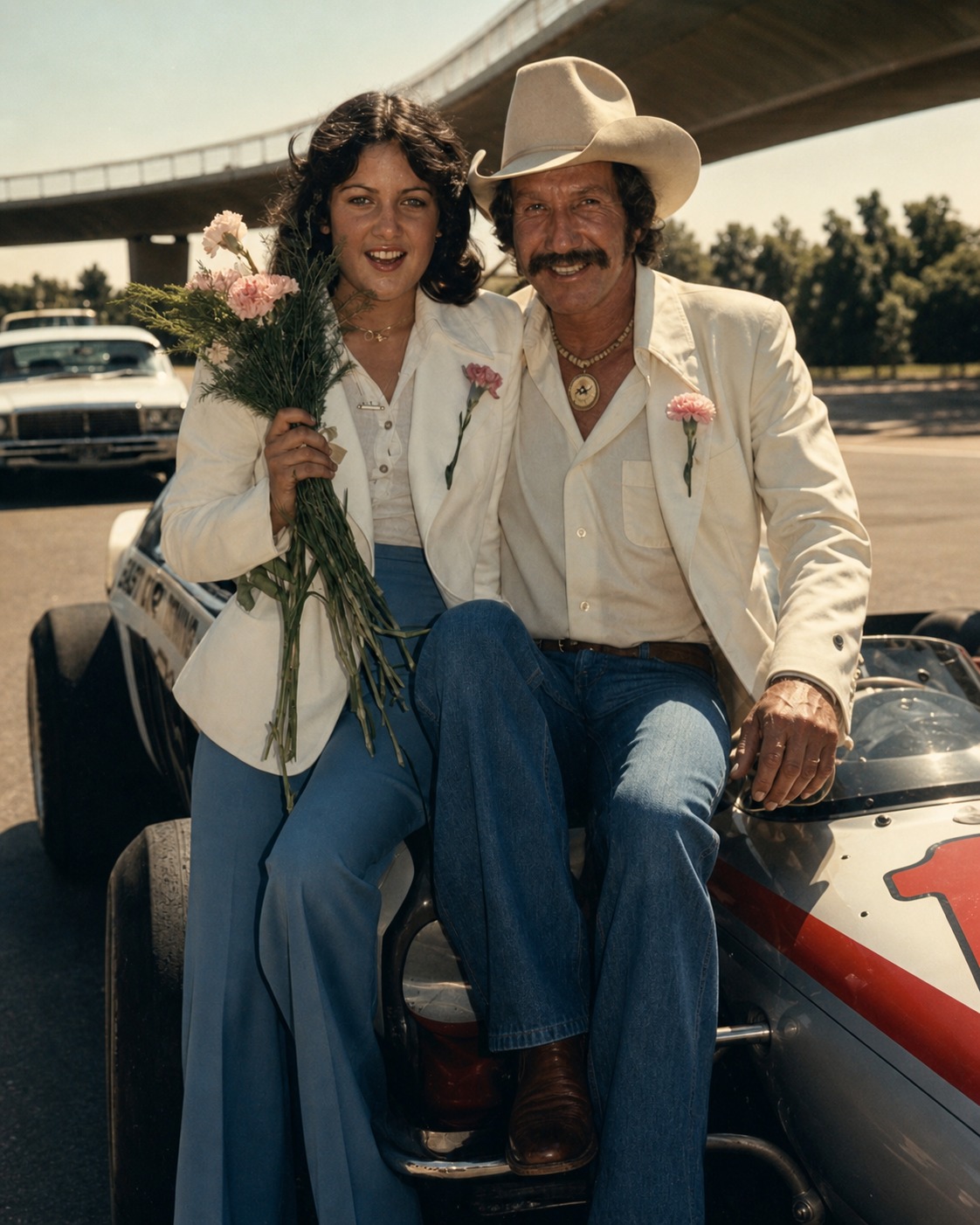
The Love Story Behind Marty Robbins’ “My Woman, My Woman, My Wife”
In the late 1940s, amidst the sun-soaked streets of Glendale, Arizona, a young woman named Marizona Baldwin harbored a dream that was as specific as it was whimsical: she wanted to marry a singing cowboy. Not just any rancher or soldier — she envisioned a man who would serenade her with music that echoed through the canyons of the American West. To her friends, this aspiration seemed the stuff of fairy tales, but Marizona held steadfast to her romantic ideal.
A Fateful Encounter
It was on an ordinary day at Upton’s Ice Cream Parlor, a modest establishment located at the northeast corner of Glendale and 58th Avenue, that this dream began to take shape. The door swung open, and in walked a lanky twenty-year-old named Martin David Robinson, fresh from his service in the U.S. Navy during World War II. During his time at sea, he had taught himself to play the guitar, nurturing the musical spark that would soon ignite his career. But at that moment, he was just an ambitious young man with dreams of his own.
Upon setting eyes on Marizona, Martin felt an instant connection. He reportedly turned to his friend and declared, “I’m gonna marry that girl.” Marizona, reflecting on that day years later, would describe it simply: “I guess it was love at first sight.” Little did they know, this chance meeting would lay the groundwork for a remarkable journey filled with trials, triumphs, and, ultimately, timeless music.
The Early Years
At the time of their meeting, Martin was not the polished country star we would later come to know as Marty Robbins. He was working odd jobs — digging ditches, driving trucks — all while performing at small venues around the Phoenix area. His nights were filled with the sounds of his guitar and the hope of one day achieving the dream he shared with Marizona. On September 27, 1948, they married, and soon after welcomed two children, Ronny and Janet, into their lives.
The path to success was anything but smooth. The couple faced financial challenges and uncertainty as Marty pursued his music career. In 1953, they made the pivotal decision to relocate to Nashville, where the bright lights of the Grand Ole Opry awaited. It was here that Marty Robbins would begin to transform from a struggling artist into one of country music’s most iconic voices.
A Song of Love and Gratitude
More than twenty years after that fateful encounter at the ice cream parlor, Marty Robbins penned a song that encapsulated the essence of their shared journey. “My Woman, My Woman, My Wife” was released in January 1970, quickly climbing to No. 1 on the country charts and earning a Grammy Award for Best Country Song in 1971. The song was not merely a ballad; it was a heartfelt tribute that reflected the deep gratitude, love, and respect he felt for Marizona.
In the lyrics, listeners could sense the weight of a lifetime spent together — the struggles, the sacrifices, and the unwavering support that Marizona had provided throughout their journey. This was a song that resonated with many, as it depicted not just romantic love but a partnership forged through shared experiences.
A Personal Connection
Just four days after the release of the single, life took a dramatic turn for Marty. He underwent open-heart surgery, becoming one of the first patients in America to do so. This life-altering event added another layer of significance to the song, transforming it into a powerful testament to love and resilience. The gratitude in Marty’s voice felt deeply personal, as if he were reflecting not only on their past but also on the fragility of life itself.
Legacy of Love and Music
Marizona Baldwin had once confided in her friends that her heart belonged to a singing cowboy. While they may have laughed at her dream, her unwavering belief ultimately led her to the love of her life. Marty Robbins walked into that ice cream parlor as an unknown, but he left as the man who would serenade the world with his music, forever entwined in Marizona’s heart.
Marty Robbins’ journey from a small-town dreamer to a legendary figure in country music serves as a reminder that love and ambition can intertwine to create something truly beautiful. Their story, marked by challenges and celebrated through song, continues to resonate with fans old and new, solidifying the legacy of both the man and the woman who dared to dream.
As we listen to “My Woman, My Woman, My Wife,” we are reminded that sometimes, life has a way of turning simple wishes into a love story that transcends time — proving that dreams, no matter how fanciful, can indeed come true.