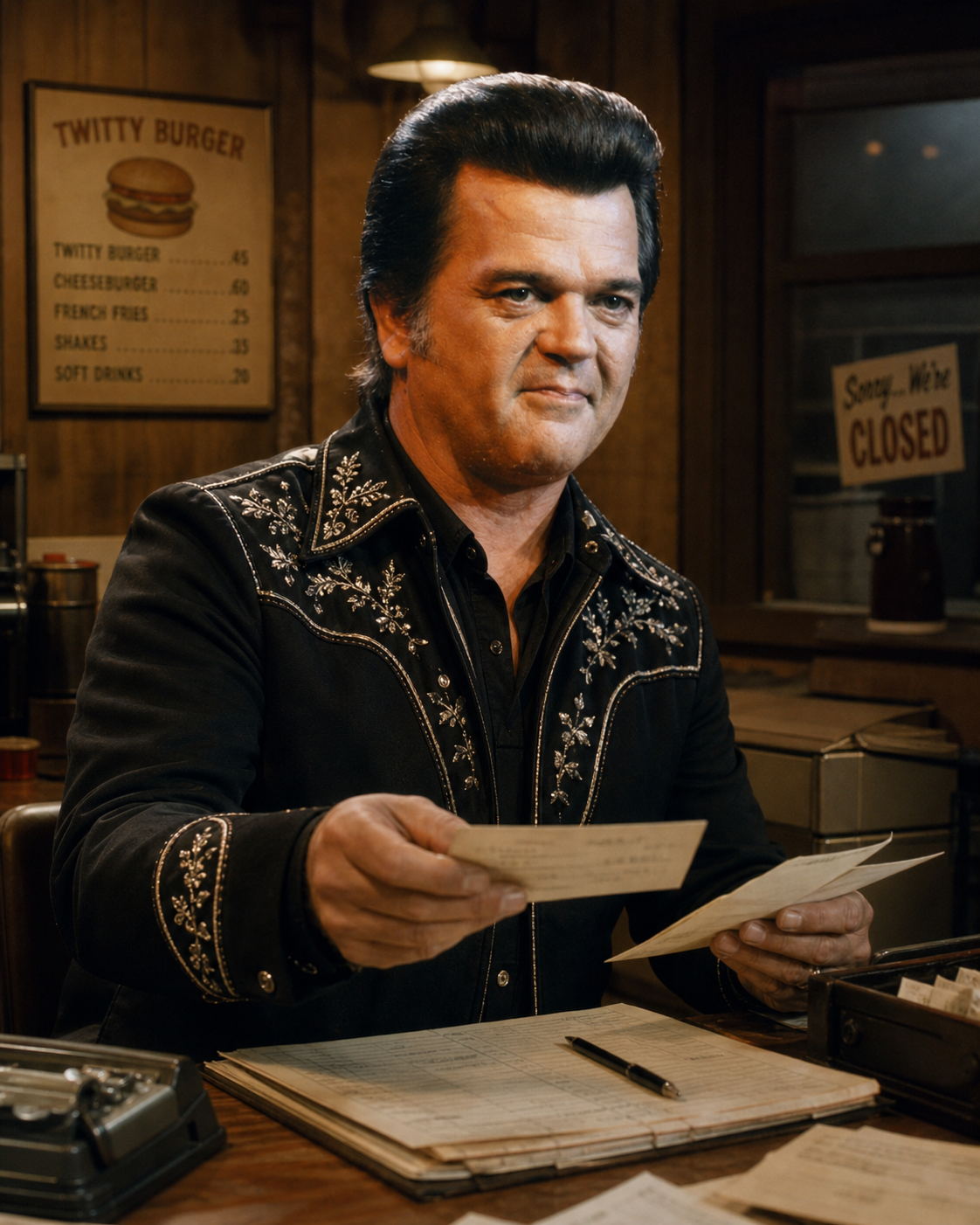
The Country Star Who Faced Adversity with Integrity: Conway Twitty’s Twitty Burger Saga
In the world of country music, few names resonate as deeply as Conway Twitty. With a smooth voice and an impressive catalog of hits, Twitty was more than just a musician; he was a man of ambition and vision. Yet, the story of his foray into the restaurant business offers a fascinating glimpse into his character and the complexities of fame in the late 1960s.
From Music to Burgers: The Birth of Twitty Burger
In 1968, Conway Twitty took a bold step beyond the stage by launching Twitty Burger, Inc. in Oklahoma. This venture was not merely a business decision; it was an ambitious attempt to transform his musical fame into a family-friendly dining experience. With the confident belief that his celebrity could open doors, Twitty invited around seventy-five friends and associates from the music industry to invest in his dream. Notable names like Merle Haggard, Harlan Howard, and Sonny James joined the endeavor, creating a sense of camaraderie and shared excitement.
The concept of Twitty Burger was anything but ordinary. The restaurant boasted a signature burger that combined grilled pineapple, bacon, and a graham-cracker-crusted patty—a combination that sounded like a culinary experiment born from late-night creativity. This unique offering was meant to capture the spirit of the times, merging the glitz of showbiz with the warmth of a home-cooked meal.
A Dream That Quickly Turned Sour
For a fleeting moment, Twitty Burger seemed poised for success. The excitement surrounding the brand was palpable, fueled by Twitty’s fame and the support of his friends. However, the harsh reality of the restaurant industry soon set in. By May 1971, the dream began to unravel, with all but one location shuttered. The financial fallout was significant, amounting to a staggering $96,000—an enormous loss, especially for a man whose primary income came from music.
Legally, Twitty was under no obligation to reimburse his investors. The nature of business ventures inherently involves risk, and losses are often understood as part of the game. However, Conway Twitty’s moral compass pointed him in a different direction. “It was the moral thing to do,” he later stated, reflecting a profound commitment to his friends and investors. This decision would eventually lead him into a unique chapter of American tax history.
A Legacy of Integrity: The IRS Battle
In an unprecedented move, Twitty opted to repay his investors in full, utilizing his earnings from his music career to do so. He believed that loyalty and reputation outweighed legal obligations. This act of integrity, however, soon led to complications with the IRS when Twitty attempted to deduct those repayments as business expenses. The case, known as Jenkins v. Commissioner, unfolded in 1983, marking a significant intersection of celebrity, business ethics, and tax law.
What made this case particularly remarkable was the court’s ruling in favor of Twitty, acknowledging that the repayments were essential for preserving his reputation as an entertainer. In an unexpected twist, the Tax Court concluded its opinion with a poem titled “Ode to Conway Twitty,” a fitting tribute to a man whose character shone through even in the face of adversity. The IRS, not to be outdone, responded in kind with a poem of their own, transforming a legal dispute into a surprisingly human narrative.
The Larger Truth: Character Over Fame
Conway Twitty passed away in 1993 at the age of fifty-nine, leaving behind not only a musical legacy characterized by one of the most recognizable voices in country music but also a story that resonates with deeper meaning. While Twitty Burger may have failed, the integrity displayed by Twitty during this tumultuous period speaks volumes about his character. It reflects a man who understood that while record sales might stem from talent, trust and friendship go far beyond mere business transactions.
The Twitty Burger saga serves as a reminder that success is not solely measured by financial gain or business triumphs. Instead, it underscores the importance of maintaining one’s values and reputation, even when faced with failure. The $96,000 loss could have faded into mere embarrassment, but Twitty transformed it into a testament to his character, demonstrating that true success lies in the relationships we nurture and the trust we uphold.
Final Thoughts: A Story Worth Remembering
Today, the story of Twitty Burger is often overshadowed by Conway Twitty’s musical achievements, yet it remains an essential part of his legacy. It illustrates how one man’s commitment to honor and integrity can resonate far beyond the walls of a failed restaurant. As we reflect on Conway Twitty’s life, we are reminded that the most enduring legacies are built not just on success, but on the moral choices we make along the way.
While the details of what happened to the investors who received their repayment checks may have faded into obscurity, the larger truth about Conway Twitty’s character endures. He may not have won in the business arena, but in the court of integrity, he emerged victorious, proving that when faced with failure, one’s true character is revealed.