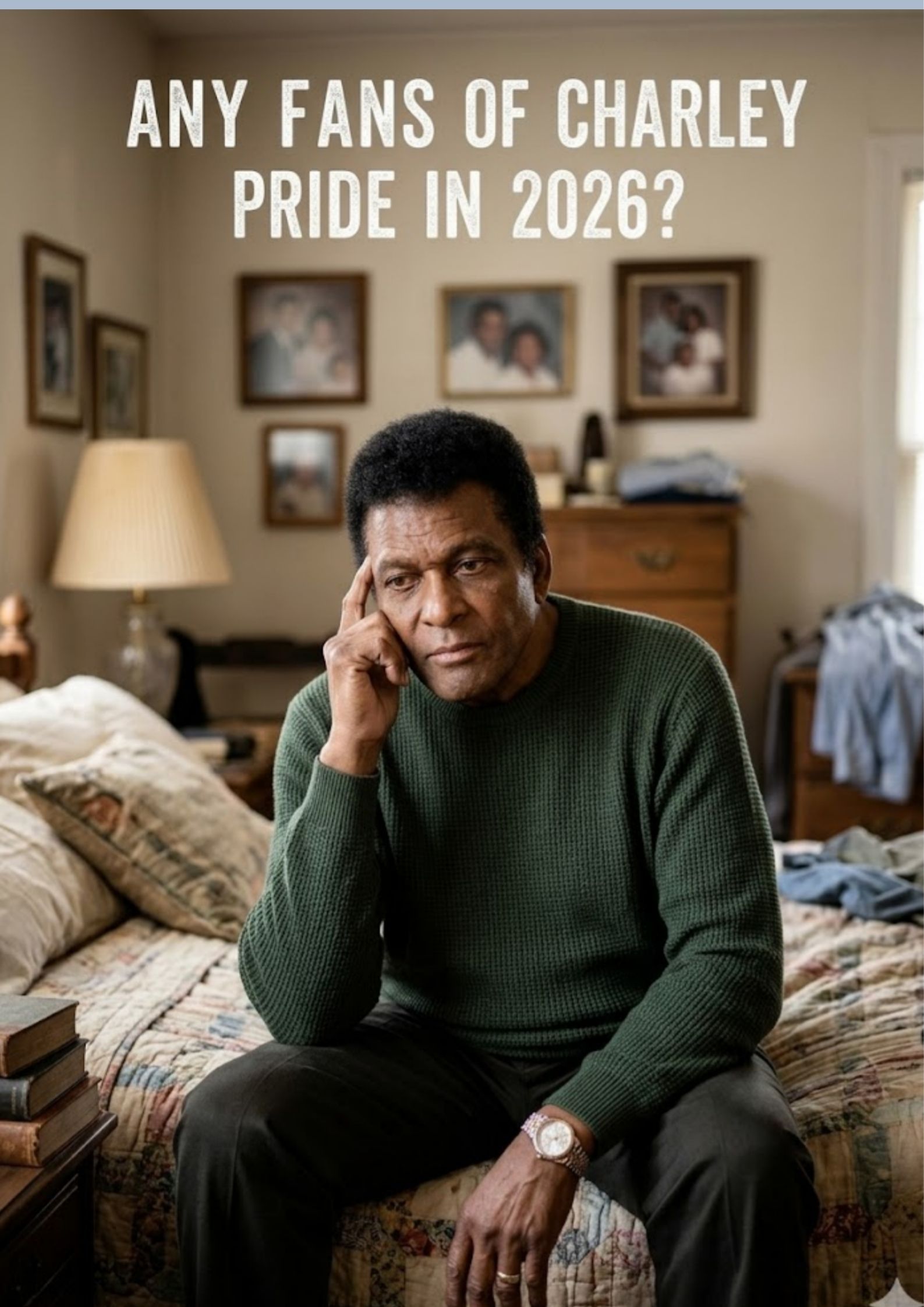
The Voice They Trusted Before They Knew His Name: How Charley Pride Changed Country Music Without Asking Permission
In the annals of music history, certain moments stand out not only for their significance but for their profound impact on the future of an entire genre. These moments often rewrite the rules of an industry, not through loud protests or flashy spectacles but through a singular force—a voice that demands to be heard. The story of Charley Pride is one such moment, a narrative that unfolds not under the bright lights of fame but in the cotton fields of Sledge, Mississippi. Here, hardship was a constant companion, and dreams were cultivated slowly and quietly.
A Star Before His Face Was Known
One of the most remarkable truths about Charley Pride’s ascent to stardom is that RCA Records released his first records without a photo on the cover. By the time country music fans finally laid eyes on him, they had already embraced him as a star. This phenomenon was not merely a marketing strategy; it was a testament to the power of trust. Before listeners could attach preconceived notions or biases to his image, they heard a voice that resonated with authenticity, shaped by years of labor, longing, and dignity. In doing so, they unknowingly opened a door to a new era in country music.
The Roots of a Dream
The backdrop of Pride’s early life was far from the glitzy life often associated with successful musicians today. As the fourth of eleven children in a sharecropping family, he grew up in an environment where survival took precedence over ambition. The cotton fields were not mere symbols of hard work; they were the very fabric of his reality. From sunrise to sunset, he toiled in the fields, yet amidst the relentless demands of daily life, a dream began to take root.
Consider the guitar that became a vessel for his dreams—not a gift or an inheritance but a hard-earned reward. For two years, Pride saved coins to purchase his instrument from a Sears catalog. This image of a young man clinging to a distant dream, nurturing it until it became tangible, speaks volumes about Charley Pride’s character. He was not waiting for discovery; he was preparing himself for the moment when that discovery might finally come.
A Journey Through Baseball
Initially, music was not even on the horizon for Pride. Like many young men of his era, he pursued a career in professional baseball, earning a place in the Negro American League. This chapter of his life, often glossed over, played a crucial role in shaping his discipline and resilience. It instilled in him the understanding that success is an endeavor that must be pursued relentlessly, not something that is simply handed over.
The Breakthrough Moment
The year 1965 marked a turning point when a demo tape caught the attention of the esteemed producer Cowboy Jack Clement. He recognized something extraordinary in Pride’s voice, leading to what would become one of the most quietly revolutionary decisions in country music history. The tape made its way to Chet Atkins, and a contract was offered before the full implications of this moment were understood.
However, once the implications became clear, the industry hesitated—not due to doubts about Pride’s talent, which was undeniable, but because of the societal context surrounding it. The era was fraught with unspoken rules about who belonged in country music. In a groundbreaking move, RCA decided to release Pride’s music without a photograph, allowing the songs to stand on their own merit. And they did.
Connecting Through Music
Listeners welcomed those songs into their homes, drawn in by the authenticity of Pride’s voice. They believed in the music, felt its depth, and by the time they discovered who was behind the magic, a connection had already formed. This is the essence of the decision to release his music without a photo—an industry’s doubt was transformed into a powerful truth: a great country voice does not seek permission; it simply exists and demands to be heard.
Staying True to Himself
Throughout his journey, there were suggestions to adjust his name, soften his image, or conform to a more palatable version of himself. But Pride’s resolute answer was a clear “no.” His refusal was not about attention-seeking but about standing firm in his identity. He had come too far to settle for someone else’s idea of comfort.
The Grand Ole Opry: A Defining Moment
The true test of Pride’s resolve came when he stepped onto the stage of the Grand Ole Opry on January 7, 1967. That night, he performed a song by Hank Williams, and what followed was a moment of profound silence, quickly followed by recognition and applause that filled the room. This performance did not merely introduce Charley Pride; it confirmed his place in the pantheon of country music. The accolades that followed—twenty-nine number-one hits, the title of Entertainer of the Year, and induction into the Country Music Hall of Fame—are impressive, but they only scratch the surface of his legacy.
A Legacy Beyond Numbers
When someone referred to Pride as the “Jackie Robinson of country music,” he received the comparison with humility, refusing to be defined solely by history. Instead, he wanted to be remembered for his music—the artistry, the dedication, and the years spent perfecting his craft. This perspective reveals the depth of his character and the essence of his legacy.
The Quiet Certainty of Belonging
Some artists demand recognition; others earn it so completely that it becomes unavoidable. Charley Pride belonged to the latter group. He did not ask the world to make space for him; he stepped into the room with quiet confidence. When he sang, there was no question of his rightful place. This is why his story continues to resonate today. Long before audiences saw his face, they made a choice that mattered more than anything: they listened. And in that act of listening, they changed the course of country music forever.