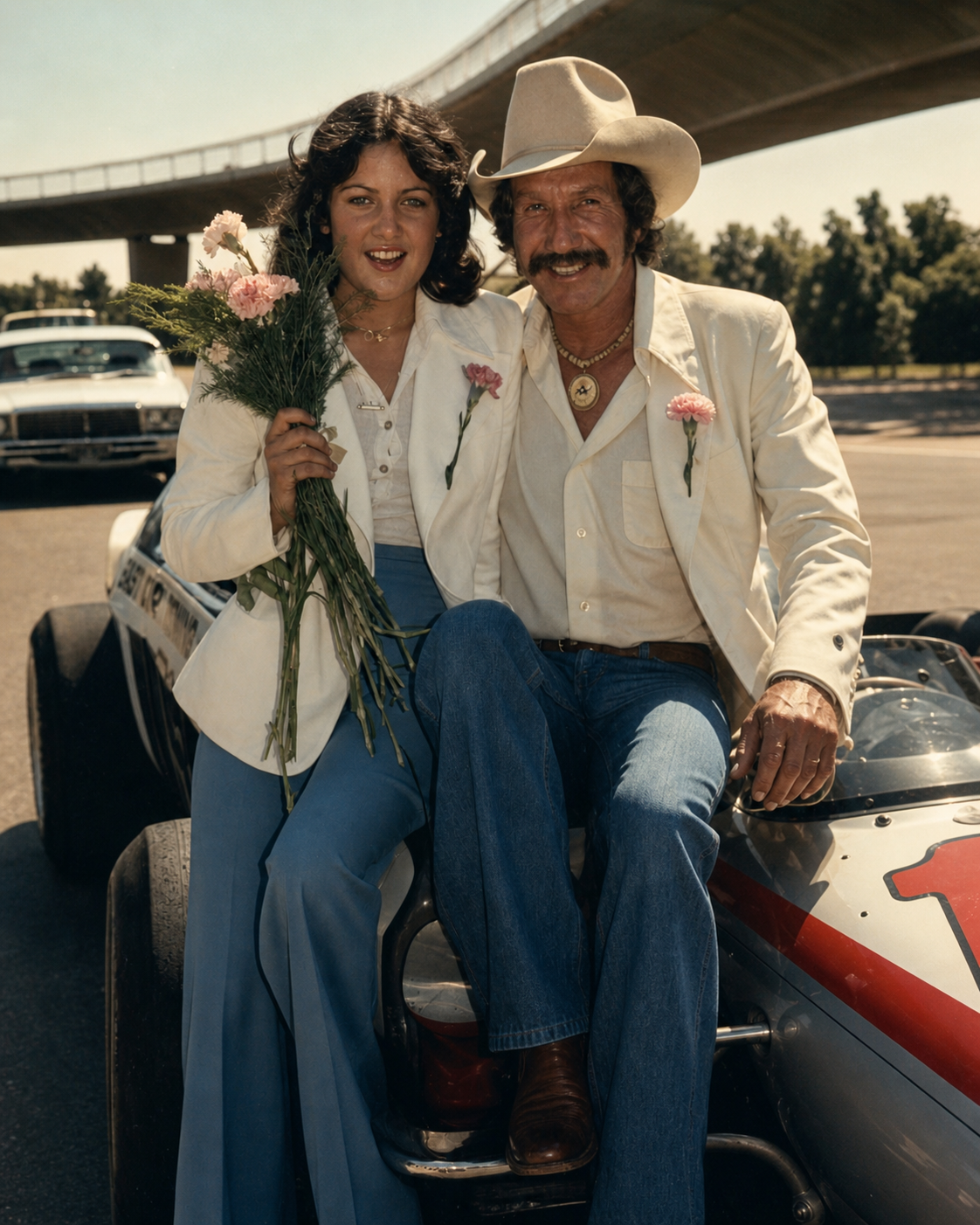
The Dream of a Singing Cowboy
In the late 1940s, Glendale, Arizona, was a place where dreams could be born over a scoop of ice cream. Among the patrons of Upton’s Ice Cream Parlor was a spirited young woman named Marizona Baldwin, who possessed a dream that was as unique as it was specific: she wanted to marry a singing cowboy. Not just any cowboy or a handsome soldier, but a man whose voice could fill rooms and hearts alike. Her friends laughed, dismissing her wish as a whimsical fantasy. Yet Marizona held onto her dream with unwavering belief, convinced that somewhere out there, a singing cowboy was waiting for her.
A Fateful Meeting
Then, one fateful afternoon, the door of Upton’s swung open, and in walked a young man named Martin David Robinson. Fresh from his service in the U.S. Navy, he carried nothing but a guitar and a half-formed dream of a life dedicated to music. At just twenty years old, he was still a stranger to the world, but something about that moment altered the course of both their lives. Upon seeing Marizona, he turned to his friend and boldly declared, “I’m gonna marry that girl.”
For Marizona, it was love at first sight, a sentiment she would cherish as their story unfolded. At that time, Martin was not yet the cowboy legend the world would come to know as Marty Robbins; he was digging ditches and driving trucks while performing in small Phoenix clubs at night, determined to chase his dream of music.
A Journey of Love and Struggle
The love story of Marty Robbins and Marizona Baldwin is not just about romance; it’s a tale of perseverance and mutual support. They married on September 27, 1948, and together they navigated the ups and downs of life. As Marty pursued his music career, they experienced both joy and heartbreak, including the loss of two infants during their early years of marriage. These experiences would later shape the emotional depth of Marty’s music.
In 1953, the couple took a significant step toward realizing their dreams when Marty moved to Nashville, the heart of country music. It was here that he began to rise through the ranks, performing at the Grand Ole Opry and achieving success that would lead him to become one of the genre’s most celebrated artists. However, fame brought its own set of challenges, including serious health issues that would test their bond.
The Song That Captured Their Story
More than two decades after their initial meeting, Marty Robbins penned a song that encapsulated their journey together: “My Woman, My Woman, My Wife.” Released in January 1970, the song was not merely another entry in the genre; it was a heartfelt tribute to Marizona, a reflection of gratitude for their shared life experiences. The song resonated with audiences, becoming a No. 1 country hit and winning the Grammy Award for Best Country Song in 1971.
The timing of the song’s release was particularly poignant. Just days after it hit the airwaves, Marty underwent open-heart surgery, transforming the lyrics into a deeply personal narrative of love, loyalty, and the fragility of life. While fans heard a romantic ballad, those who understood the backstory recognized the profound connection it had to their shared history.
A Legacy of Love and Music
The enduring legacy of Marty Robbins and Marizona Baldwin extends far beyond their individual successes. Their love story is a testament to the power of belief and the importance of seeing potential in others before the world does. Marizona had envisioned her singing cowboy long before Marty achieved fame, and in doing so, she became an integral part of country music history.
As Marty Robbins ascended to stardom, he remained deeply rooted in the love and support that Marizona provided. They raised two children, Ronny and Janet, while navigating the pressures of fame and the struggles of life together. The story of their love continues to resonate today, reminding us that behind every great artist is often a partner who believes in them from the very beginning.
Conclusion: A Dream Realized
The narrative of Marty Robbins and Marizona Baldwin is a poignant reminder of the dreams we hold dear and the extraordinary ways they can come to fruition. What began as a whimsical wish in an ice cream parlor blossomed into a love story that shaped the landscape of country music. Marizona’s dream of marrying a singing cowboy became a reality when Marty walked through that door, and together, they created a legacy that will be cherished for generations to come.
In the words of Marty Robbins, his life and music were forever changed by the woman who believed in him long before the applause began. Their love story is not just a chapter in country music history; it is a timeless testament to the power of dreams, love, and unwavering support.